- Solutions
Back to Knowledge Center
Buy A Standalone TMS System or Find a Strategic 4PL Partner?
Should you buy a TMS system or find a 4PL partner? Compare costs, control, visibility and long-term value to find the right fit for your supply chain.
May 12, 2026 — 8 Min Read
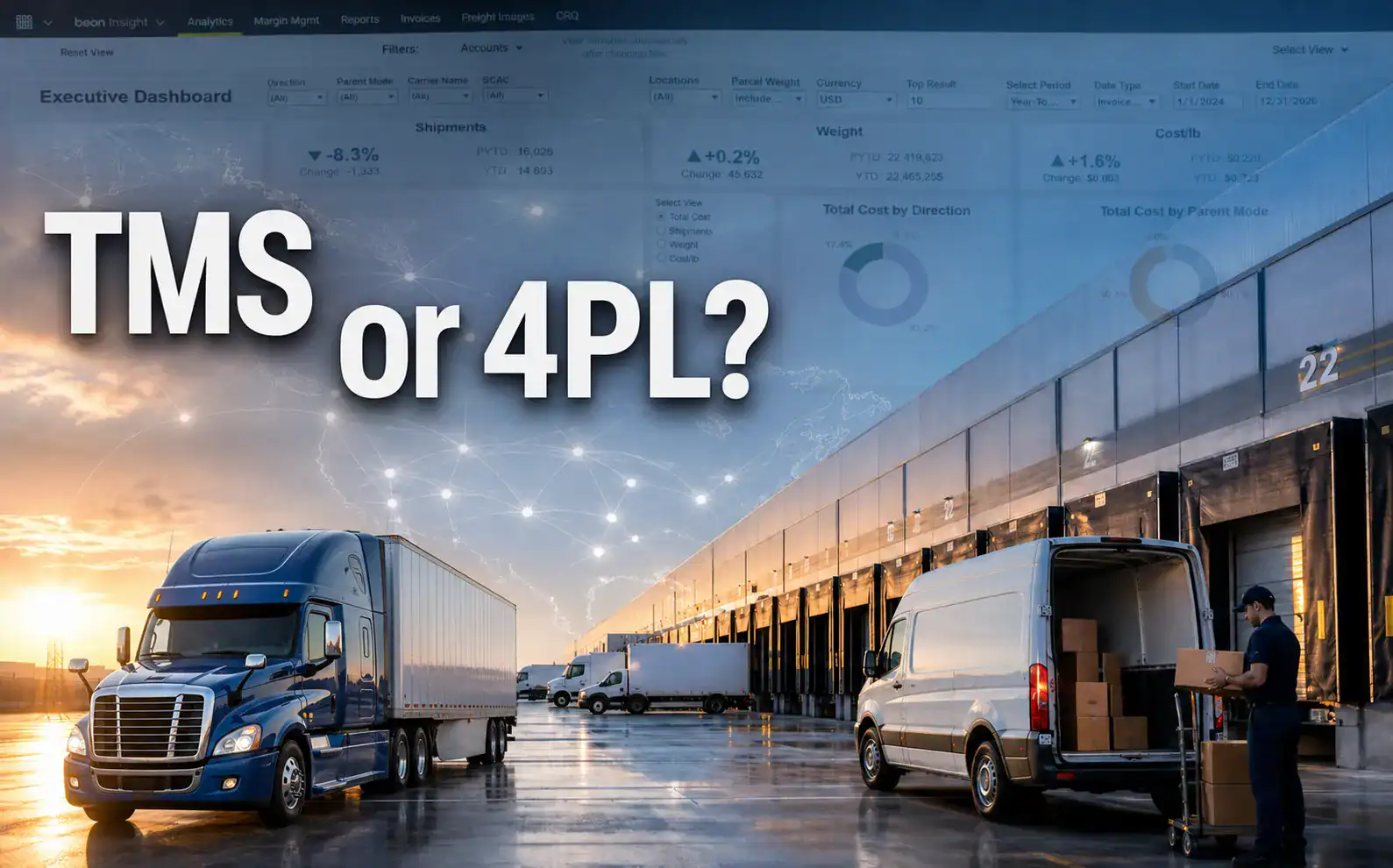
Shippers that want to reduce freight costs or improve transportation operations often face a common question: Should I buy a TMS software solution, or work with a strategic 4PL partner that includes TMS technology within a holistic logistics solution?
Both approaches can improve freight management, logistics visibility and overall supply chain management. The difference is where you place responsibility for day-to-day transportation execution and what strategy you have in place to drive long-term value within the supply chain.
This guide explains where a technology-only solution and a 4PL partner overlap, and where a strategic 4PL partnership can add capabilities and value that many organizations cannot afford to build and scale in-house.
What Is a TMS?
A TMS is logistics software you buy or license. It supports rating, routing, tendering, shipment visibility, real time tracking, and, in some cases, layers of optimization and light auditing of carrier charges.
In many organizations, the TMS becomes the system of record for transportation execution and cost data. It replaces manual processes with one platform at the core of the logistics operation.
Used well, a TMS gives teams better control over daily freight decisions. It provides timely data and a clearer view of the network, which supports more data driven decisions and more reliable, on time delivery.
What Does a 4PL Deliver?
A fourth party logistics provider (4PL), also called a lead logistics provider, is a strategic partner that manages transportation on your behalf. As part of a holistic solution, a 4PL will leverage TMS technology as the execution engine of an enhanced logistics strategy, along with:
- Carrier sourcing and management across different transportation modes
- Complex freight audit and recovery
- Management of day-to-day transportation operations & program compliance
- Analytics, reporting and continuous improvement
A 4PL can orchestrate multiple carriers, brokers and other logistics partners, so the transportation network operates as a single, integrated system.
Both models rely on technology and timely data. A TMS is a tool your team uses and manages. A 4PL is a strategic partner that leverages TMS technology and other capabilities to drive greater levels of value and scale across your organization.
Where a TMS and a 4PL Deliver Similar Value
Buying a TMS license or working with a 4PL can both provide:
- A platform for rating, routing and tendering shipments
- Visibility to shipment status across carriers and modes
- Basic reporting and dashboards for transportation performance
If your main goal is to replace spreadsheets and gain a single system of record, a TMS on its own or a TMS accessed through a 4PL can meet that need. Both can support real-time tracking and timely data to manage exceptions and protect customer service.
Where a TMS Only Solution and a 4PL Begin Diverging: Who Owns the Work?
- Procurement and Carrier Strategy
With either option, you still need a carrier network, contracts and a way to measure cost and service.
- TMS only: Your internal team designs and runs sourcing events, negotiates with carriers and updates lane strategies. This model suits shippers that want direct control over carrier relationships and have the people to manage them.
- 4PL: More of that work shifts to the provider. A 4PL brings strategic carrier sourcing, dedicated procurement expertise and market insight across many shippers. For many organizations, this turns procurement into a more data driven, repeatable discipline without adding headcount.
- Freight Audit and Financial Integrity
- TMS only: A TMS can rate shipments at tender, flag basic billing differences and export data for internal audit teams. With TMS only, you still own rating logic, exception research and recovery tracking. For some shippers, that is enough.
- 4PL: A 4PL usually turns freight audit into a continuous, industrialized process that normalizes invoices, tests charges against contracts, shipment data and documentation, and manages disputes through to resolution. Shippers that want a more robust audit, recovery and prevention process without expanding their own staff often prefer this model.
- Data, Visibility and Real Time Tracking
- TMS only: A TMS can centralize shipment events, connect to carriers for status updates and feed data to other systems. You are responsible for integrations with order management, ERP and finance, and for keeping them current.
- 4PL: In many 4PL models, data consolidation is part of the service scope. The 4PL coordinates integrations, onboards new partners and monitors data quality. For lean IT teams, this can be a major benefit. In both models, strong data consolidation supports more accurate real time tracking and a more complete view of your logistics operation, which leads to faster, better decisions across your supply chain.
- Analytics, Insights and Action
- TMS only: Both a TMS and a 4PL can provide dashboards, reports and data exports, but with TMS only, your analytics are specific to your execution data versus including post-audit, final landed cost data to compare. Your leaders choose the metrics, investigate trends and convert findings into policy, routing or network changes. This works well when you have strong internal analytics skills.
- 4PL: You often get a provider analytics team, regular performance reviews and specific recommendations. The 4PL helps carry changes through to execution, using timely data to support continuous improvement and competitive advantage.
- Continuous Improvement and Governance
- TMS only: A TMS gives you data and configuration tools so you can adjust rules and workflows over time, but your results will depend on internal focus and bandwidth.
- 4PL: 4PL relationships often include more formal governance: scheduled reviews, shared issue logs and a roadmap of initiatives. This structure makes continuous improvement a key element of the partnership instead of a side project. Combined with real time tracking and clear accountability, it can support steady improvement in cost, service and customer experience.
- Costs, Contracts and Risk
- TMS only: A model centralized on TMS technology alone typically includes significant license or subscription fees, implementation and integration costs and professional services for any changes along the partnership journey. Once the system is live, vendor revenue is tied to usage, with no incentive to drive cost or service improvements. Some shippers prefer the predictability of a software license.
- 4PL: 4PL partnerships also include technology and implementation, but often add performance elements, such as shared savings models, service level targets and incentives for identifying new value. This does not remove risk, but it changes how risk and reward are shared. Others accept variable fees if they are tied to measurable results and help strengthen their logistics operation.
When Does A TMS Only Strategy Fit?
A TMS only approach can be a strong fit when:
- You have solid in-house transportation expertise
- Your network is relatively simple and stable
- You want direct control and have the resources to fully own procurement, analytics and improvement
In this case, a TMS can be an effective foundation. If you treat it as part of a larger operating model, and not a complete solution, a well-managed TMS still supports real time tracking, timely data and better day-to-day decisions.
When Does Adding A 4PL As a Strategic Partner Make Sense?
A 4PL partnership often makes sense when:
- Your network is complex or changing quickly and you need to adapt quickly
- Your internal team is lean and focused on other priorities supporting the business
- Leadership expects ongoing improvement in cost, service and resilience without adding additional resources
- You need better visibility into execution-level and post-invoice data to drive continuous improvement
Here, the 4PL acts as a strategic partner that brings TMS technology, carrier sourcing, audit, operations, analytics and continuous improvement together. Many shippers use this model to turn transportation performance into a clearer competitive advantage. It also enables supply chain leaders to focus on strategy and customer needs while the 4PL handles more of the detailed work required for timely data and timely delivery.
How to Decide What Is Right for You
Choosing between buying a TMS system and partnering with a 4PL is not about finding one perfect answer. It is about finding the right partnership approach that fits your strategy, resources and willingness to adapt to complexity.
A TMS only model fits if you want to own the logistics operation, keep carrier relationships close, and build internal expertise. A 4PL model fits if you want a partner to bring technology, talent and processes together, so you can focus more on your business and less on execution.
If you can define which responsibilities must stay inside your organization and which you are willing to share, the choice becomes clearer. At that point, deciding between buying a TMS platform and partnering with a 4PL is easier to explain to stakeholders, and delivers a clear picture of the logistics strategy, data driven decisions and competitive advantage you want to build.
About Author:





On this article:
Sign Up for the TI Newsletter