
- Solutions
Back to Knowledge Center
Manage Transportation Volatility with Supply Chain Visibility
Learn how supply chain visibility, flexible decision rules and contingency capacity help you design transportation networks that manage volatility, cost and service.
Apr 30, 2026 — 7 Min Read
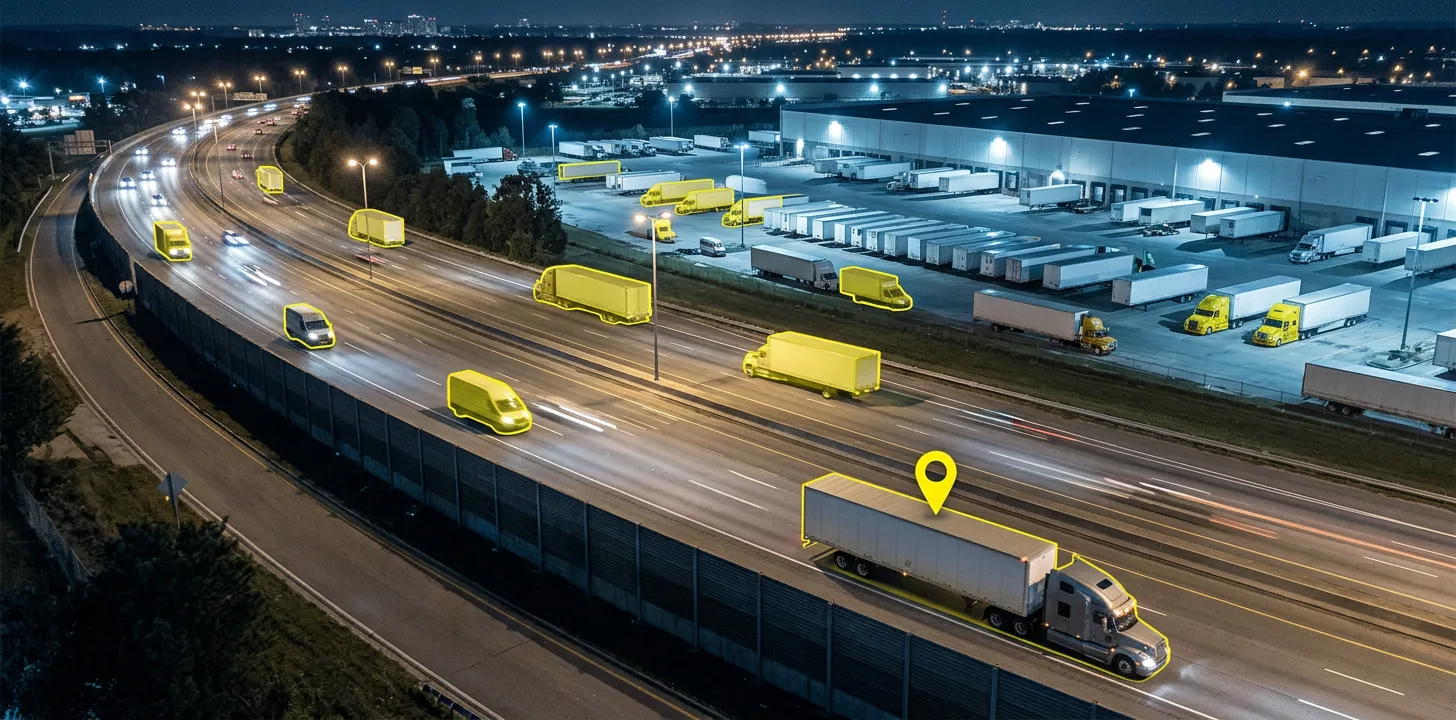
Volatility is no longer a rare stress test for your transportation network. It is a daily design constraint.
Demand patterns shift with promotions, channels and macro factors. Carrier networks adjust capacity and service offerings. Regulatory and labor changes arrive with real impact. Customer expectations evolve quickly.
Many transportation processes, however, still assume a relatively stable world. They are optimized for one expected pattern of demand, one capacity picture and a narrow band of external conditions. When that assumption fails, organizations see more transportation rate increases, more exceptions, higher shipping costs, more surprises for customers and more time spent in crisis meetings.
For finance and operations executives, managing transportation volatility means building systems that are prepared to change, not merely exposed to change. That starts with supply chain visibility into demand, inventory and carrier performance and the transportation management practices and tools to act on what you see.
In practice, supply chain visibility is the connective tissue for transportation optimization. It connects what is happening in your network right now with the rules, capacity strategies and scenarios that determine how you respond when conditions shift.
From Best Case Design to Range Based Design with Supply Chain Visibility
Stable designs often rely on a best case or single case view:
- Forecasts have a central estimate that drives plans.
- Contracted carriers are expected to cover most volume.
- Service policies assume typical demand and typical conditions.
When actual conditions deviate materially, your design has little room to bend.
Volatility oriented design starts by acknowledging that:
- Forecasts will be inaccurate within a meaningful range.
- Carriers will sometimes reject tenders or shift capacity.
- Peaks, disruptions and special events will occur regularly.
Managing transportation volatility means using ranges instead of single points. For example:
- Defining acceptable cost and service bands, given different demand and capacity conditions.
- Modeling multiple scenarios for key flows and embedding responses into rules.
Range based design gives teams space to operate without constant escalation. When supply chain visibility data feeds these scenarios, teams can see how different demand and capacity ranges impact cost and service across lanes, modes and regions. That becomes the foundation for ongoing transportation network optimization and logistics network optimization rather than a one-time bid event that is obsolete as soon as conditions change.
Is your transportation operation built to handle volatility?
Take this short assessment to see how much stress your transportation models can handle.
Building Flexible Decision Rules in Transportation Management
Flexible decision rules are at the core of volatility ready transportation.
Static rules say:
- Use this mode and this carrier for this lane and customer, unless someone overrides.
Adaptive rules say:
- Under normal conditions, use this mode and carrier.
- If volume, capacity or service indicators move outside defined thresholds, follow these alternate paths within these cost and service limits.
Examples include:
- Mode rules that allow shifting between different equipment types or service levels based on volume and capacity thresholds.
- Service rules that define when to move from standard to faster options for specific segments with clear margin and budget constraints.
- Routing rules that permit temporary use of alternate origins or consolidation points under disruption.
These rules must be encoded in your transportation management systems and understood by teams, so they can adapt quickly without reinventing logic each time.
When those systems are informed by real time supply chain visibility and apply transportation optimization logic to current demand and capacity conditions, they can automatically recommend alternate modes, carriers or routes within defined cost, service and freight cost management guardrails. Over time, this becomes a form of continuous transportation network optimization that learns from every tender, exception and recovery.
Integrating Contingency into Capacity Strategy
Volatility ready design also includes integrated contingency capacity.
Rather than relying entirely on primary carriers and hoping they can stretch, resilient capacity strategies include:
- Secondary and tertiary carriers with pre negotiated terms and activation criteria.
- Flexible use of regional carriers, pool points or cross docks under stress.
- Diversification of modes or service types where feasible.
Contingency is not a secondary component, but part of the core contract and capacity strategy.
With the right supply chain visibility, shippers can see where capacity is tightening, which lanes are at risk and when to activate contingency options before service or freight cost management gets out of control. Instead of discovering issues only when tenders fail or customers complain, transportation teams can make proactive decisions with clear triggers for when to bring backup capacity online.
Designing for Volatility Across the Transportation Network
Volatility has different faces across your transportation network:
- On long haul lanes, volatility may appear as sudden lane imbalances, changing cube and weight patterns or network shifts.
- Near customers, it may appear as spikes in smaller orders, surcharges, service changes and new product flows.
Designing each part of the network independently can create new problems:
- Strategies that centralize inventory purely for linehaul efficiency can worsen volatility in final delivery.
- Service strategies that tighten promises without adjusting upstream flows can force more frequent, expensive replenishment.
Volatility design must be holistic:
- Shared scenario planning where transportation, planning and operations test how strategies interact.
- Joint rules for which SKUs and customers should receive which combination of positioning and service.
- Common views of capacity risk and recovery paths across geographies and flows.
When these views come together around a common supply chain visibility backbone, transportation network optimization becomes part of daily decision making rather than a one-time modeling exercise. The result is real logistics network optimization, not just lower rates on a few lanes but a network that can flex under stress without eroding margin or service or driving unsustainable shipping costs.
Transportation Insight supports unified scenario design so responses align rather than collide. We help shippers connect supply chain visibility with transportation network optimization, so managing volatility part of everyday transportation optimization, instead of a recurring emergency.
Balancing Cost, Risk and Service Under Volatility
Managing transportation volatility is ultimately about balancing cost, risk and service.
For CFOs, that means:
- Treating resilience measures as planned investments, not just after the fact expenses.
- Comparing the cost of added flexibility and contingency to historical and projected volatility impacts.
- Embedding freight cost management into volatility scenarios so cost impacts are understood before teams activate alternate carriers, modes or routes.
- Setting clear financial guardrails for adaptive responses.
For COOs and supply chain leaders, it means:
- Defining where flexibility is required and where discipline must remain tight.
- Ensuring teams know when they can adapt independently and when they must escalate.
- Using post event data to refine rules and investments over time, guided by supply chain visibility and transportation management insights.
When cost, risk and service tradeoffs are explicit and reinforced by your visibility platform, optimization tools and decision rules, transportation teams can respond faster without constantly seeking executive approval. The result is a more resilient operation and a clearer path to reduced transportation costs over time.
Gauge How Ready Your Transportation Network Is for Today’s Volatility
Volatility is now a core design input, not an occasional test. Managing transportation volatility means trading in rigid plans and single point assumptions for ranges, flexible rules and built in contingency. When your system expects conditions to change and has clear ways to respond, disruption becomes a managed event rather than a recurring emergency.
The Built for Adaptation Self Evaluation can help you see how far along that path you already are. It highlights where your design already reflects realistic ranges and where you are still betting on best case scenarios. That insight lets you upgrade your planning, rules and capacity strategy where it matters most.
If you are not sure where to start, focus first on improving supply chain visibility so your teams can see volatility as it develops. From there, refine your transportation management approach and network design so the organization can respond quickly when conditions change, while keeping shipping costs and transportation spend under control.
About Author:




On this article:
Sign up for the TI newsletter to get exclusive updates.