
- Solutions
Back to Knowledge Center
Broad Carrier Mix Challenges Peak Season Parcel Visibility
A broader carrier mix during peak season can make parcel visibility harder to manage. See why interpretation, not carrier performance, is the real risk.
Sep 8, 2026 — 4 Min Read

A broader carrier mix can strengthen a parcel network, but it also raises the bar for parcel visibility. During peak season, the differences in how each carrier reports shipment status can turn into delays, confusion and unnecessary escalations.
That gap often shows up first as a rise in WISMO calls, before it ever reaches operations.
Why Does a Broader Carrier Mix Become a Parcel Visibility Problem?
Carrier diversification has become an important part of parcel strategy.
Adding regional and alternative carriers can improve coverage, reduce costs and give shippers options when national carrier networks are constrained.
But every carrier you add also adds another way of communicating what is happening to a package.
Why Does the Same Shipment Read Differently by Carrier?
Imagine two shipments leaving the same fulfillment center during peak. One moves through a national carrier the company has used for years. The other moves through a regional carrier added to improve cost and coverage.
The national carrier’s tracking looks familiar: pickup, hub, out for delivery, delivered.
An alternative carrier’s tracking may look different. There’s a pickup scan followed by several hours of silence before the next update. That gap is normal for how the carrier processes tracking events, but a customer service representative who doesn’t know that may see a stalled package.
Now multiply that across thousands of shipments and several carriers.
The problem isn’t necessarily carrier performance. It’s interpretation.
Why Does Peak Season Leave No Room to Work Around It?
One carrier may update scans immediately while another batches them. Event descriptions differ. Exception codes differ. Even something as basic as searching for a shipment can work differently depending on the carrier.
During normal volume, teams have time to work around those differences. During peak, they don’t.
Customer service may interpret a shipment one way while operations, working in a separate carrier portal, sees something completely different. Reps spend more time searching, comparing and escalating issues that may not actually be issues at all.
That’s when carrier diversification becomes a visibility challenge.
How Do You Improve Parcel Visibility Across a Broader Carrier Mix?
The answer isn’t fewer carriers. A broader carrier mix can create significant value through better rates, coverage and flexibility. The answer is making those carriers easier for the business to understand.
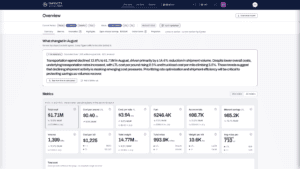
When shipment information is normalized into one view, teams don’t have to become experts in how every carrier communicates. A customer service representative can search by customer, order or tracking number and understand what is happening without first figuring out which carrier has the package. Operations sees that same information and can distinguish normal carrier behavior from an exception that needs attention.
That becomes even more valuable during peak, when there is little room for interpretation or manual investigation.
Carrier diversification gives a parcel network more options. Visibility is what makes those options manageable.
Because a well-understood carrier mix builds a stronger network.
Invest in the tools so it isn’t just a bigger blind spot with better rates.
Frequently Asked Questions
Does adding more carriers create a parcel visibility problem?
Adding regional or alternative carriers can improve coverage and rates, but each carrier communicates shipment status differently. Without a normalized view, that difference in event language and scan timing can look like a problem even when nothing is wrong.
Why does carrier diversification cause more issues during peak season?
During normal volume, teams have time to work around each carrier’s differences. During peak season that time disappears, so a normal batching gap on one carrier can get escalated as if it were a delay.
Should shippers use fewer carriers to avoid visibility problems?
No. A broader carrier mix still creates value through better rates, coverage and flexibility. The fix is normalizing shipment data into one view so teams do not have to interpret each carrier separately.
About Author:
More Blogs





On this article:
Sign Up for the TI Newsletter