
- Solutions
Back to Knowledge Center
When Stable Transportation Models Break
Transportation models built for stability crack under volatility. Learn how to rethink design for today’s constant change.
Mar 31, 2026 — 5 Min Read
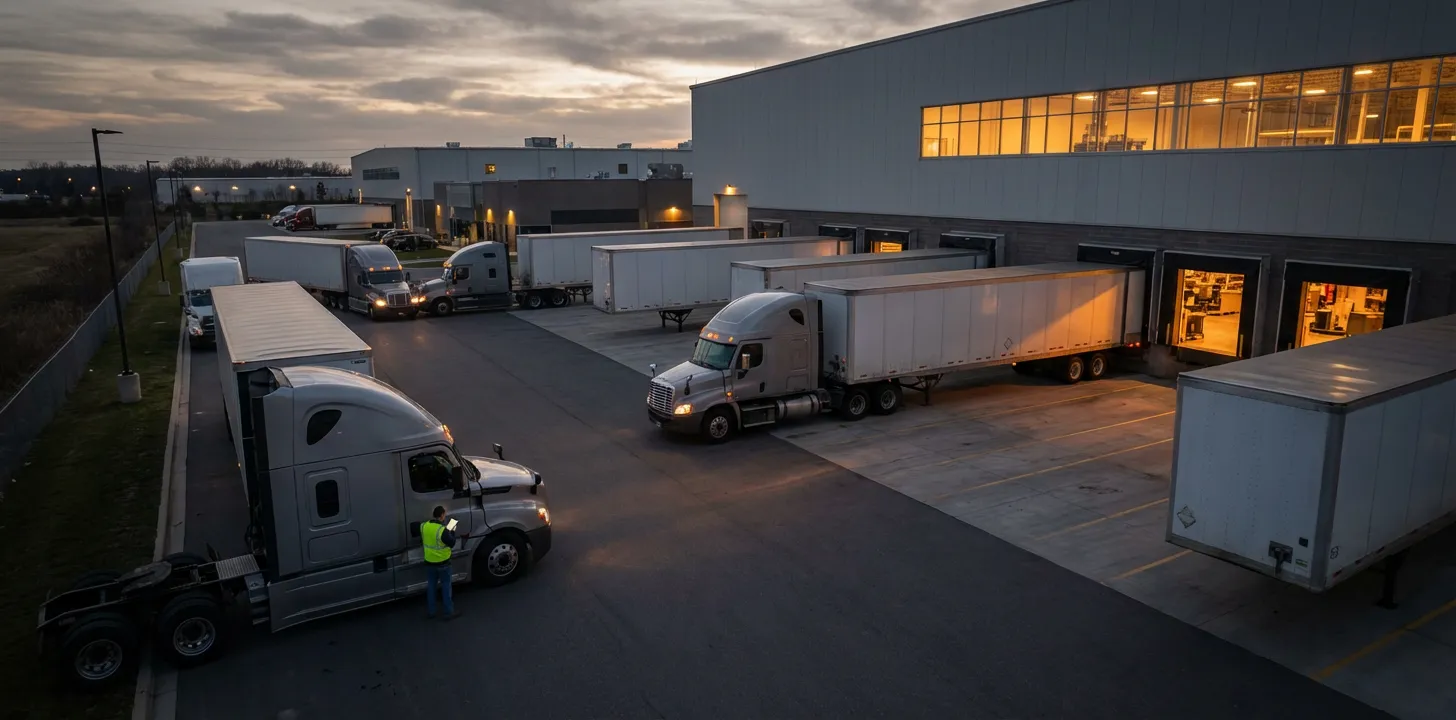
Many transportation models in use today were built for a different era. They assume that demand varies within a manageable band, that carrier capacity is broadly available, that service expectations evolve gradually and that rare disruptions can be handled with extra effort and experience.
In that world, stability was a reasonable design target.
Today, volatility is not an exception. It is the rule. Demand swings with promotions and channel shifts. Capacity tightens and loosens unevenly. Labor and regulatory environments move faster. Customer expectations on service levels dynamically change.
Transportation models built for stability now break in predictable ways. For finance and operations executives, the question is not whether volatility will continue, but whether your transportation model will falter under the succumbing pressure or weather the storm through resilience and adaptation.
How much stress can your transportation model handle?
Take a few minutes to see where stability assumptions may be putting you at risk.
How Stability Oriented Models Behave Under Volatility
Stability-oriented models assume:
- Planned volumes will be close to actual volumes
- Contracted carriers will generally accept tenders
- Lead times and service levels can be held constant over long periods
- Exceptions will be occasional and can be handled manually without real disruption
Under volatility, these assumptions are put to the test. You experience:
- Frequent tender rejections and are forced to rely on secondary or spot carriers
- More shipments missing planned windows even as teams work harder
- Increased use of premium services that lower margins to protect promises
- Rising overtime and stress as people compensate for system gaps
In calm moments, the model still looks acceptable. During peaks, disruptions or market shifts, it collapses into a string of improvisations that hurt your customers’ experience and cause your profit margins to drop.
The Hidden Dependency on Heroics
Stable models often look good on slides. They show routing guides, service policies and simple flows. In practice, they rely heavily on people filling gaps between plan and reality.
Examples include:
- Planners who quietly adjust schedules to fit actual capacity
- Dispatchers who know which carriers will accept a late tender
- Customer-facing teams who renegotiate promises in real time
- Managers who override rules to keep key customers satisfied
As long as volatility and complexity remain within the range your team can handle, the model appears to work and vails the inherent risk to your business. When volatility grows or key people move on, the true fragility of the model surfaces and forces a more sustainable response.
Why Volatility Is a Long-term Design Opportunity, not a Short-term Fix
Historically, organizations treated volatility and disruption as stress tests for an otherwise stable design. They asked:
- How will our network behave if there is a storm, labor issue or spike in demand
- Do we have contingency plans for those specific events
Today, volatility is frequent and multifaceted. Treating it as an occasional scenario underestimates its impact.
Designing for adaptation means:
- Assuming demand and capacity will deviate from plan regularly
- Expecting that some lanes and carriers will be disrupted each year
- Recognizing that customer expectations will continue to tighten
- Accepting that new strategies and product launches will continue to change workflows
Volatility moves from an assumed short-term risk to an opportunity for a better, more sustainable long-term design.
Financial Consequences of Outdated Models
Stable models in a volatile world create financial noise. You may experience:
- Transportation cost variance that is consistently larger than expected, with many “one off” explanations
- Growing premium transportation and exceptions that negatively impact margins
- Frequent need to revise budgets and forecasts as conditions outpace original assumptions
Because responses are often improvised, cost incurred in the name of resilience is neither well tracked nor well managed. It becomes a residual, not a planned investment.
On the balance sheet, you may experience:
- Inventory imbalances as organizations react defensively by overstocking some nodes and understocking others
- Working capital shifts as transit times elongate or become less predictable
- Potential write-offs when certain lanes or service promises are no longer viable in practice
For CFOs, this reduces confidence in forecasts and obscures the real cost of volatility.
Moving From Stability to Adaptation
Rebuilding your transportation model for adaptation requires several shifts.
- From point forecasts to ranges
Instead of designing around single point forecasts, design around realistic ranges of volume, capacity and lead time. Define acceptable bands rather than rigid targets.
- From fixed rules to adaptive rules
Decision rules for mode, carrier and service should include triggers for shifting behavior when conditions move outside normal ranges, not only default paths.
- From ad hoc contingency to integrated resilience
Contingency plans and alternate capacity should be part of core design and contracts, not handled as separate documents that are rarely updated.
- From heroic response to governed flexibility
Flexibility must be governed by clear roles and guardrails so teams adapt quickly without losing control.
What Adaptive Models Look Like in Practice
Adaptive models:
- Incorporate defined flex points into routing and service policies
- Use capacity strategies that assume some level of rejection and disruption
- Employ visibility and analytics to trigger predefined responses instead of improvised ones
- Include simple learning loops so rules and capacities improve after events
They do not eliminate volatility. They keep it from turning into constant crisis.
See How Much of Your Model Still Assumes Stability
Transportation models that were designed for a calmer world will keep failing in a volatile one. You can either keep patching those failures shipment by shipment, or you can redesign your model around the reality that demand, capacity and expectations will keep moving. When you design for adaptation instead of for an ideal steady state, volatility stops being a constant surprise and becomes something your foundational model is prepared to handle.
If you want a fast, structured view of how much of your current model still assumes stability, Transportation Insight’s Built for Adaptation Self Evaluation can provide it. That baseline makes it easier to prioritize the design changes that will help your transportation model bend with volatility instead of breaking every time conditions shift.
About Author:
More Blogs





On this article:
Sign up for the TI newsletter to get exclusive updates.