
- Solutions
Back to Knowledge Center
Unbundle Inbound Freight to Regain Landed Cost Visibility
Vendor-managed inbound freight conceals true landed costs. Unbundling supplier freight allowances exposes hidden margin and boosts control.
Sep 22, 2026 — 6 Min Read
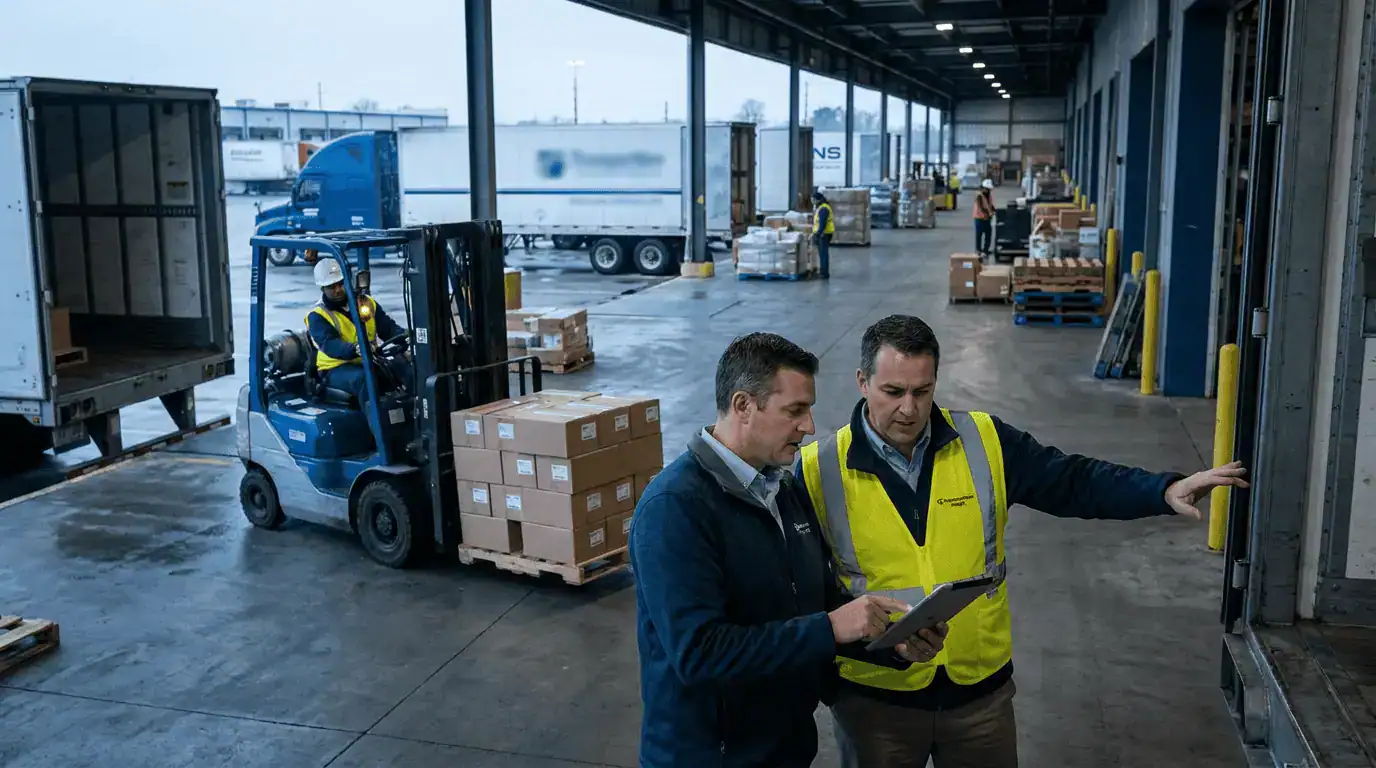
Many manufacturing executives believe that vendor-managed inbound freight is a convenient, low-risk way to handle inbound raw materials. When suppliers bundle transportation into the purchase price or bill an agreed-upon freight allowance, internal logistics teams avoid the daily work of booking loads, tracking drivers and auditing carrier invoices. It feels predictable and simpler to have one less area to own.
However, there is a cost to not managing your inbound transportation beyond simply the price of freight. In practice, suppliers treat transportation as a cost center with downside risk, adding administrative margins, conservative capacity buffers and standard accessorial markups to the invoice. Shippers pay a premium for that perceived convenience. Worse, leaving inbound execution in vendor hands creates an operational blind spot across receiving docks, inventory planning and accounting reconciliation. True landed costs remain elusive and operational disruption becomes normal.
Taking control of inbound freight is one of the most reliable ways to reduce transportation costs, improve profit margins, and stabilize operations. The goal is not to create administrative friction with critical suppliers. The goal is to establish complete visibility and routing governance over every inbound mile to protect your supply chain and your customer experience downstream.
Why Are Inbound Freight Allowances Distorting Total Landed Cost?
Inbound freight allowances distort total landed cost because they combine commercial material pricing with estimated transportation rates into a single line item. This bundling prevents procurement and operations teams from determining whether unit cost inflation is driven by raw material commodity swings, carrier market tightening or embedded supplier profit.
When a supplier manages freight, their primary objective is protecting their margin, not reducing your transportation spend. To protect themselves against spot rate volatility and fuel swings, vendors routinely build safety markups into their freight rates. A manufacturer shipping high-volume raw materials across multiple supplier facilities pays those built-in buffers on every purchase order, regardless of actual market conditions.
This structural lack of itemization introduces several persistent challenges:
- Inaccurate item-level margins: Finance teams cannot allocate accurate landed costs to specific bills of materials or stock keeping units, distorting inventory valuation.
- Phantom transportation inflation: Rate decreases achieved on outbound freight networks fail to benefit the inbound side of the balance sheet.
- Additional services impact: Shippers often absorb detention, liftgate and delivery appointment fees billed directly by the supplier with no access to carrier delivery receipts.
- Uncaptured volume leverage: Hundreds of thousands of inbound pounds bypass your core carrier base, diluting your enterprise purchasing power.
The Operational Cost of Vendor-Managed Shipping
The financial leakage of bundled freight is significant, but the operational drag on manufacturing plants is often worse. When dozens of regional vendors select their own carriers, receiving docks face continuous unpredictability.
Individual suppliers optimize for their own shipping schedules, not your receiving velocity. One vendor tenders an order to a low-cost regional LTL provider, another books a national dry van carrier and a third relies on an unvetted local courier. The result is dock congestion, worker overtime and uncoordinated delivery appointments. Plant managers cannot sequence inbound raw materials to match internal schedules because they lack advance shipment notifications and overall visibility. Your inbound supply chain becomes a bottleneck you can only react to, negatively impacting not only your own operations, but your customers’ experience downstream.
How to Shift from Prepaid to Collect Shipping
Transitioning from prepaid to collect freight requires a disciplined, data-driven approach that aligns procurement, logistics and accounts payable. Shippers should not attempt an immediate, network-wide mandate. A phased migration protects operational continuity while systematically proving savings.
1. Audit Purchase Orders and Identify Allowances
Begin by reviewing historical purchase orders, supplier contracts and bills of lading across the top twenty material vendors. Require vendors to unbundle their quotes into two distinct line items: the net commercial price of the goods at the dock and the specific freight charge. Comparing that stated allowance against your contracted rates instantly exposes the margin spread.
2. Model Lane Density Against Your Routing Guide
Evaluate whether incoming vendor volume aligns with existing freight corridors. Inbound supplier lanes often mirror outbound customer routes. By integrating inbound volume into your contracted network through strategic LTL & truckload carrier procurement, you create density that unlocks deeper volume tier discounts across both freight directions.
3. Establish a Standard Inbound Routing Guide
Publish a clear, non-negotiable vendor routing guide that specifies how, when and with whom suppliers must tender shipments to include:
- Standardized rules for optimizing mode between parcel, LTL, full truckload
- Prescribed carrier accounts, electronic bill of lading formatting and mandatory purchase order notation standards
- Designated load planning team or direct TMS access for load building
4. Deploy Automated Exception and Chargeback Workflows
A routing guide without enforcement will be ignored. When a supplier ships outside the routing matrix, uses an unapproved carrier or splits a single purchase order into multiple LTL movements, costs escalate. An automated freight management system captures these discrepancies before payment. Non-compliance chargebacks should recover the variance between the contracted rate and the unauthorized carrier bills.
Unbundling Drayage and Port-to-Plant Movements
The benefits of unbundling extend beyond domestic ground transport. Manufacturers importing overseas components frequently rely on freight forwarders or international suppliers for end-to-end door delivery. In these arrangements, domestic drayage and destination accessorials are routinely marked up with substantial margin buffers.
When ocean containers arrive at domestic marine terminals or rail ramps, unmonitored supplier drayage creates severe demurrage and per diem exposure. If customs documentation is delayed or the supplier’s drayman lacks chassis availability, detention fees accrue rapidly. Standard carrier invoices regularly arrive months after delivery with minimal itemization. By taking direct control of the drayage leg, manufacturers gain milestone tracking, prioritize container pulls based on plant urgency and eliminate intermediary margin layers.
Closing the visibility loop also requires disciplined post-shipment verification. Leveraging an enterprise freight bill audit & payment process ensures that carrier bills on collect shipments match contracted rate tables down to the cent, preventing duplicate billing and incorrect fuel calculations.
What Helps Shippers Execute Inbound Freight Control
Transitioning to collect freight requires continuous operational governance. Leading manufacturing organizations rely on specific foundational capabilities:
- Automated vendor portals: Cloud-based portals allow suppliers to enter purchase order numbers, pallet counts and ready-times to receive instantaneous, compliant carrier assignments.
- Dynamic rating engines: Systems that calculate least-cost carrier routing based on real-time capacity and linear-foot utilization rather than static regional tables.
- Integrated dock scheduling: Synchronizing inbound shipment tracking with plant-level door management software to eliminate dwell time and driver detention.
- Granular landed cost reporting: Business intelligence platforms that assign linehaul, fuel and accessorial costs back to specific production work orders in the ERP.
Final Takeaway
Treating inbound freight as a vendor responsibility is an expensive & disruptive operational decision. Every bundled shipment obscures true profit margins, forfeits carrier purchasing leverage and introduces unpredictability to your labor operations, all of which will impact your customer experience. Shifting to inbound transportation ownership provides the visibility and control required to protect enterprise profitability.
Transportation Insight can help you evaluate inbound supplier freight, identify unbundled margin opportunities and implement disciplined routing control across your network.
About Author:





On this article:
Sign Up for the TI Newsletter