
- Solutions
Back to Knowledge Center
Transportation Decision Advantage for CFOs
Most transportation problems are really decision problems. Learn how executives can move key choices upstream, clarify ownership and turn transportation into a reliable financial lever instead of a creeping cost.
Mar 17, 2026 — 4 Min Read
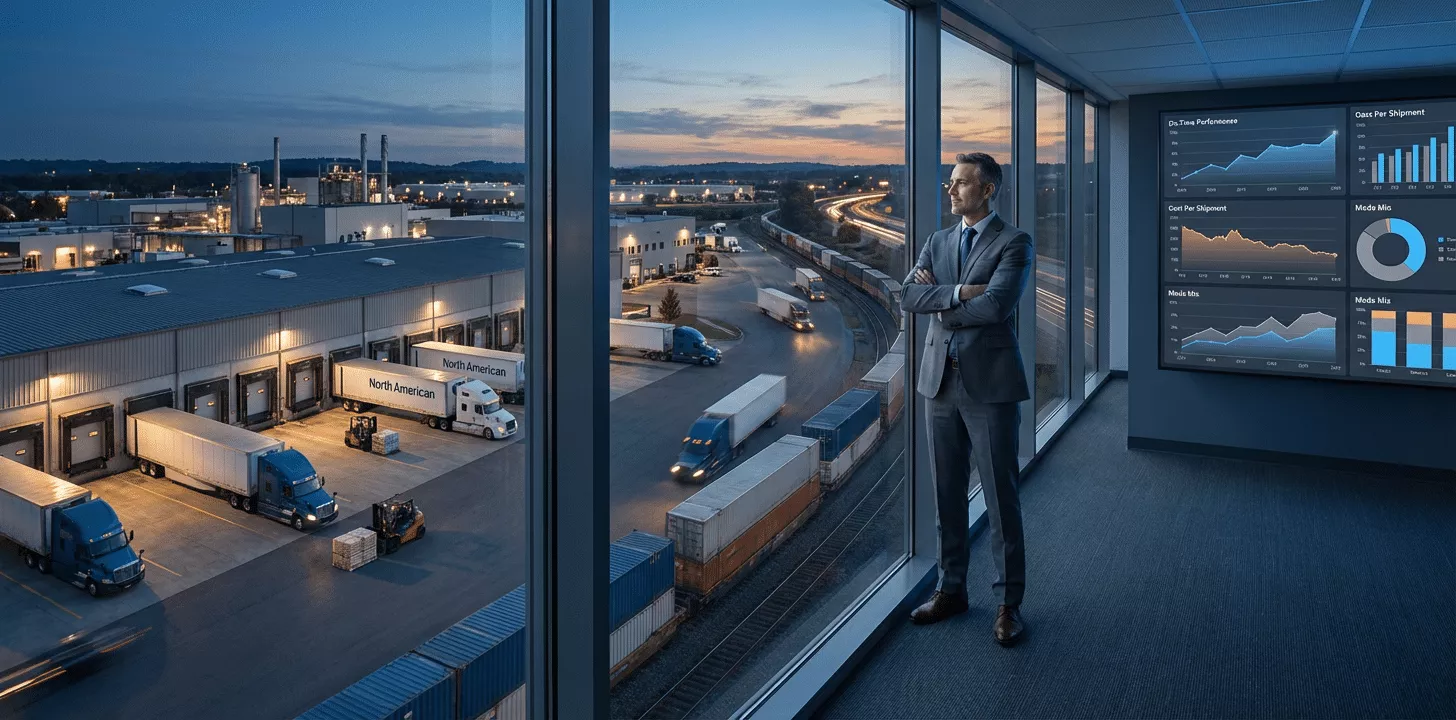
Transportation performance rarely gets decided when freight moves. Leaders shape outcomes much earlier through decision timing, ownership and clarity around tradeoffs. When teams decide late or without accountability, cost rises and execution turns reactive.
Most transportation problems appear operational on the surface. Expedited freight, missed service commitments and constant escalation usually trace back to decisions made too late or without clear ownership. Execution absorbs pressure created upstream.
Executives who build a transportation decision advantage do not make more decisions. They move decisions earlier and make them repeatable. They design decision structure, so outcomes follow intent rather than urgency.
The Hidden Tax of Late Transportation Decisions
Think about how many transportation choices in your organization happen at the last possible moment. An important order is booked late and sales promises a date that compresses your normal lead time. A plant change pushes production back by a day and the original shipping plan no longer works. A promotion launches without enough notice for demand planning to respond.
Late decisions compress options. Carrier availability tightens. Consolidation windows close. Premium service fills the gap.
By the time these choices reach transportation, your options have already narrowed. Capacity that was available days ago has been awarded to other shippers. Orders that could have shared a load now move alone. Dock schedules are full and inventory sits in the wrong place.
Teams fall back on expedited modes and higher cost accessorials to protect customer commitments. The safer, more expensive choice becomes the default because there is no time left to test alternatives.
From a finance perspective, this shows up as a slow increase in transportation cost with no clear cause. Each shipment looks justified in isolation. A key customer was at risk. A critical order was behind schedule. The pattern only becomes visible when you step back. Late decisions compress options and the P&L pays the price.
Unlock Your Transportation Decision Advantage
Take a short assessment to see how decision timing and ownership impact your transportation cost and executive‑level visibility.
Why It Is Not Just a Transportation Problem
Viewed through a narrow lens, these issues appear to live in transportation. Routing guides are bypassed. Tenders are rejected. Carrier commitments are missed. Exception queues are full. It is easy to conclude that execution is not disciplined or that teams are not enforcing policy.
The reality is more complex. Transportation is the point of impact, not the point of origin. Decisions made in demand planning, order promising, production planning and customer service all shape the context in which transportation operates. When those decisions are late, misaligned or opaque, transportation is left to manage residual risk.
You can upgrade systems, renegotiate carrier contracts and retrain teams. Those efforts may create short-term gains. If the structure of upstream decisions does not change, financial outcomes will not change in a durable way. Transportation decision advantage comes from structure, not speed.
Moving Transportation Decisions Upstream
Organizations with a transportation decision advantage move key decisions earlier in the planning cycle. They define planning horizons for mode selection, routing and service commitments instead of waiting for shipment urgency. They treat transportation as part of planning, not only as an activity at the dock.
Leaders define for each major decision when it must be made in the planning cycle, who owns it at each point and what inputs must be available. That decision window turns early decisions into repeatable practice instead of a one-time push.
We work with leadership teams to articulate transportation’s role in their broader strategy. We then assess current decision timing, ownership and evaluation against that intent. We look at where behaviors align and where they diverge and identify structural changes that can close the gap.
Our solutions support the new structure. We configure transportation management systems to reflect decision rules. We align carrier strategies with desired service and cost outcomes. We set up analytics that show whether decisions follow intent or drift back toward urgency.
We also help build governance routines that keep intent and structure connected. As markets, customers and networks change, these routines ensure that transportation design evolves instead of sliding back into reactive behavior.
Turn Transportation Decisions into a Financial Lever
A transportation decision advantage is not about getting deeper into operational detail. It is about making sure the structure of timing, ownership and evaluation reflects the financial outcomes you expect. When those structures are clear and aligned, transportation shifts from a volatile expense to a controllable lever on your P&L.
If you want a concise read on where your current decision structure helps or hurts that goal, Transportation Insight’s Transportation Decision Advantage Self Evaluation can provide it. It highlights where timing, ownership and evaluation are strongest and where small changes could unlock a more disciplined, CFO-ready transportation environment.
About Author:





On this article:
Sign up for the TI newsletter to get exclusive updates.