
- Solutions
Back to Knowledge Center
The Rise of the Integration Layer in Supply Chain Tech
Explore how an API-first integration layer unlocks faster carrier onboarding, cleaner data and real optimization across parcel, LTL and TL supply chain tech.
Jan 15, 2026 — 5 Min Read
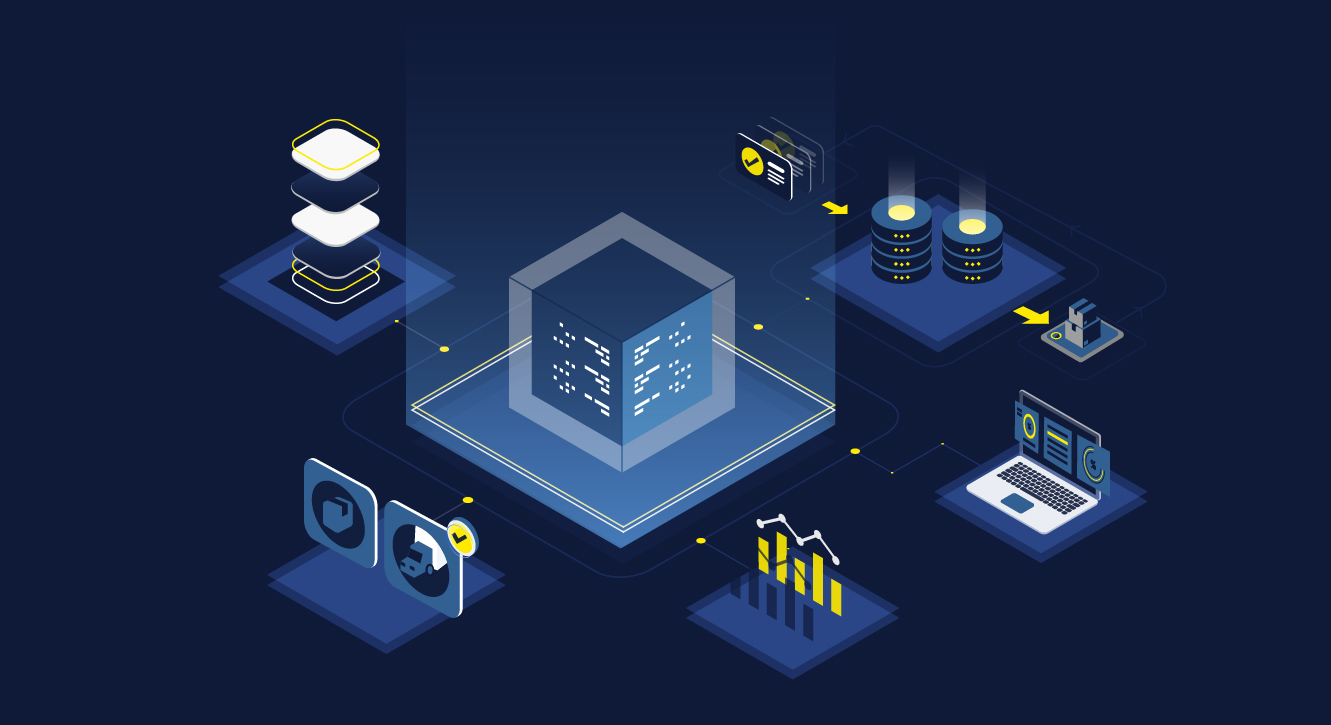
For years, supply chain technology evolved in waves: transportation management systems (TMS), warehouse systems (WMS), visibility platforms, rating engines, audit tools and analytics layers. Each wave added capability but also complexity.
Today, a new layer is emerging as foundational rather than optional: the integration layer. As networks grow more dynamic and parcel, LTL and TL operations increasingly converge, API-based integration hubs are becoming the backbone of the modern supply chain network.
This shift is not just about cleaner architecture. It is about speed, resilience and real optimization.
Why API-Based Hubs Are Replacing Point-to-Point Integration Platforms
Point-to-point integrations made sense when supply chains were simpler. One TMS system connected to a handful of carriers. One format per connection. Limited change velocity.
They still serve a purpose today, particularly in stable, narrowly scoped environments or for targeted, tactical integrations. But as supply chains grow more complex, relying on point-to-point connections as the primary integration strategy becomes increasingly difficult to sustain.
Modern transportation ecosystems now involve:
- Dozens (or hundreds) of parcel regional or alternative carriers
- Multiple TMS, WMS, OMS and customer systems
- Rapid onboarding and offboarding of partners
- Constant API and schema changes
In this environment, point-to-point architecture struggles to scale efficiently. Every new carrier, system or data change multiplies complexity. Maintenance costs rise, integrations grow brittle and innovation slows.
API-based integration hubs solve these challenges by changing the structure, not the intent, of integration.
Instead of every system talking to every other system, each participant connects once to the hub. The hub manages:
- Protocol translation (API, EDI, flat files)
- Data normalization
- Versioning and change management
- Security and governance
Companies that adopt this model build fewer integrations, onboard faster and cut operational risk. In practice, many modern architectures blend both approaches and use point-to-point selectively while relying on an integration layer as the system of record for scale.
How the Right Integration Layer Simplifies Parcel, LTL and TL Routing & Execution
Routing and execution across parcel, LTL and TL have traditionally lived in separate worlds, each with different carriers, data models and decision logic.
The right integration layer unifies these modes.
One Routing Brain, Many Execution Paths
When you centralize carrier connectivity and data standards, routing decisions no longer need to be mode-specific. A single optimization engine can:
- Compare parcel vs. LTL breakpoints
- Blend regional and national carrier options
- Apply consistent business rules across modes
Once the engine makes a decision, the integration layer drives seamless execution regardless of carrier or mode.
Faster Carrier Expansion
Regional parcel expansion, new LTL partners or dedicated TL providers often stall because integrations take months. A hub-based model changes that:
- Your team onboards new carriers once
- The hub maps their data to a common schema
- All connected systems benefit immediately
This approach shortens time to value and creates real network agility.
Cleaner Exception Management
Execution failures such as label errors, rate mismatches and tender rejections often stem from integration issues, not operations. A centralized integration layer gives operations teams:
- Consistent error handling
- Unified visibility into failures
- Faster root cause analysis
Instead of chasing issues across disconnected systems, teams see where and why problems occur and fix them at the source.
Why Clean, Normalized Data Is the Foundation for Real Optimization
Your optimization is only as strong as the data that feeds it. Yet many supply chains still run on fragmented, inconsistent and carrier-specific data sets.
An integration layer does more than move data. It standardizes and improves it.
Normalization Enables Comparability
Carrier A’s “service level” rarely matches Carrier B’s. Parcel dimensional rules differ from LTL freight class logic. Without normalization:
- Rate comparisons mislead decision makers
- Transit times appear inconsistent
- Performance analytics lose credibility
A strong integration layer translates all inbound data into a clean, common model so teams can make true apples-to-apples decisions.
Clean Data Unlocks Advanced Capabilities
Once you normalize data, you can unlock higher order capabilities:
- True cost-to-serve analysis
- Mode optimization across parcel, LTL and TL
- Predictive transit and exception modeling
- Smarter audits and automated dispute resolution
Without this foundation, optimization often becomes rule-based routing with nicer dashboards.
Data Quality at the Edge Matters
The integration layer sits at the edge of the network where data enters and exits. That edge is the ideal place to:
- Validate inputs
- Enforce standards
- Enrich records with context
By fixing data upstream, you prevent downstream chaos and significantly improve system reliability.
The Integration Layer as a Strategic Asset
What has changed most is how leaders view integration.
It no longer sits in the background as an IT concern or a one-time implementation task. The integration layer is becoming:
- A strategic platform
- A competitive advantage
- A force multiplier for routing, execution and analytics
As supply chain processes become more dynamic and customer expectations continue to rise, the companies that win will be those that adapt fastest. An API-first, normalized integration layer makes that adaptability possible.
In many ways, the future of supply chain tech will not depend on the next system you buy. It will depend on how well you connect the systems you already have.
About Author:






On this article:
Sign up for the TI newsletter to get exclusive updates.