
- Solutions
Back to Knowledge Center
Prepare for FedEx and UPS Dimensional Weight Cost Shifts
FedEx and UPS will begin rounding up all package dimensions starting August 18, impacting parcel shipping costs. Learn how dimensional weight changes may affect your business.
Aug 8, 2025 — 3 Min Read

On August 18, both FedEx and UPS will implement a change that could significantly affect your parcel shipping costs. Every package dimension, including length, width and height, will now be rounded up to the next whole inch when calculating dimensional weight.
While this may seem like a small adjustment, the financial impact could be substantial—especially now that both major carriers are applying it.
What’s Changing with Dimensional Weight Policies?
Historically, FedEx rounded actual package weight up to the nearest pound but fractional dimensions under 0.5 inches were rounded down. That meant a box measuring 13.1 inches would be billed as 13 inches. Not anymore. Under the new policy, FedEx will round 13.1 inches up to 14 inches across all three dimensions.
UPS will apply the same rounding approach starting August 18, mirroring the FedEx change. This means any fraction over a whole inch in any dimension will be rounded up, no matter how small.
Since dimensional weight (DIM weight) is used to calculate shipping charges when a package is large but light, this change could push many shipments into a higher billing category.
How Carriers Calculate Dimensional Weight
Both FedEx and UPS determine dimensional weight using the formula:
(Length × Width × Height) ÷ 139
If the resulting dimensional weight is greater than the actual weight of the package, shipping charges are based on the higher value.
Starting August 18, every fraction of an inch in your measurement will be rounded up. This inflates the volume used in the calculation and can tip a shipment over pricing thresholds for standard weight, Additional Handling Charges (AHC) or Oversize (LPS) surcharges.
Examples of the Financial Impact
Let’s look at three real-world parcel shipping examples that highlight the impact of this rule change:
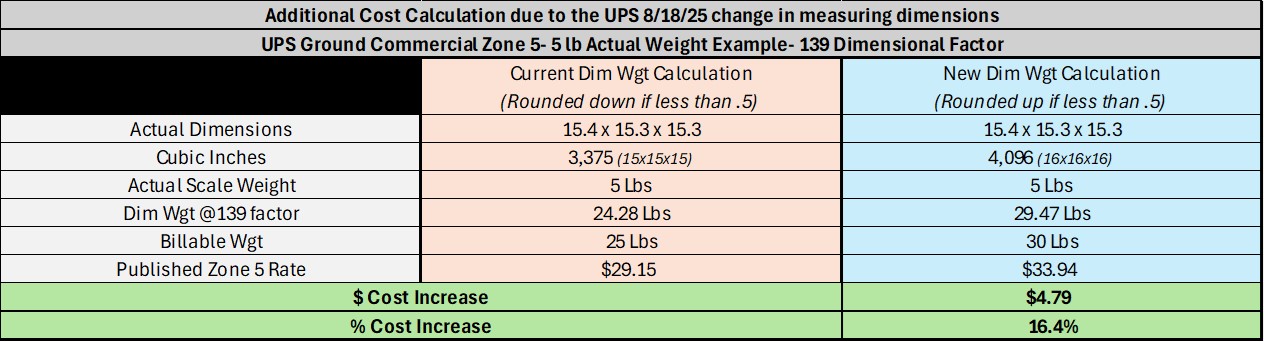
Example 1: Zone 5, 5 lb. package
Previously billed using rounded-down dimensions
After the policy change, dimensions round up, increasing the DIM weight
Result: Higher chargeable weight and increased cost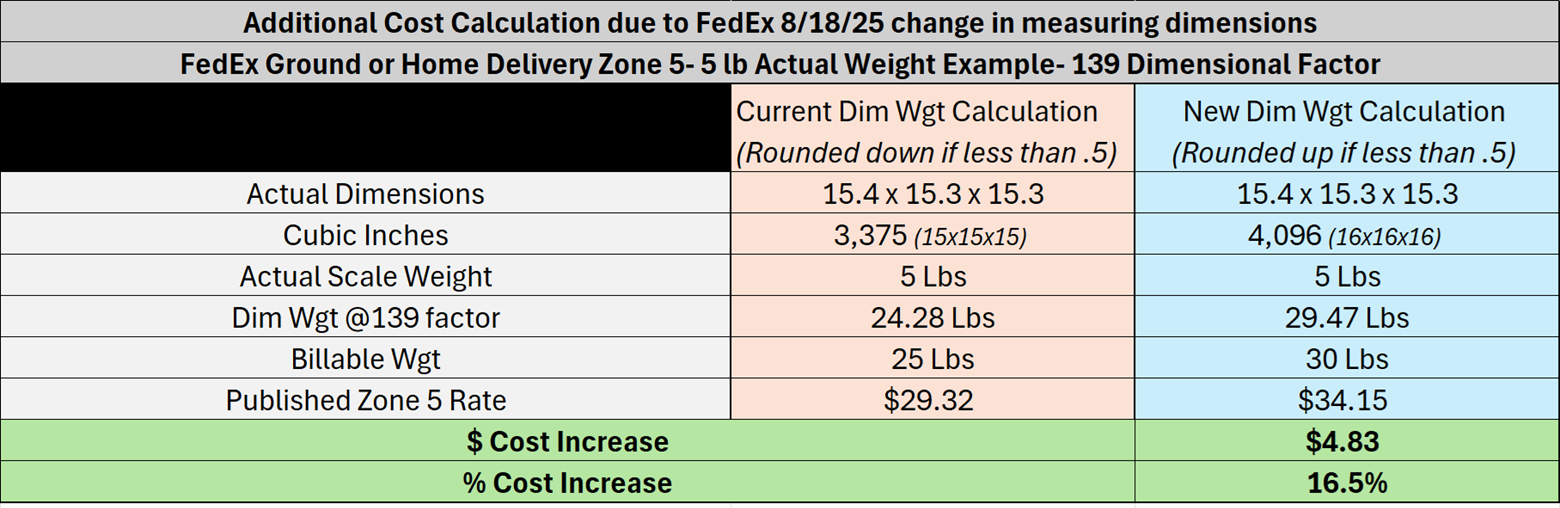
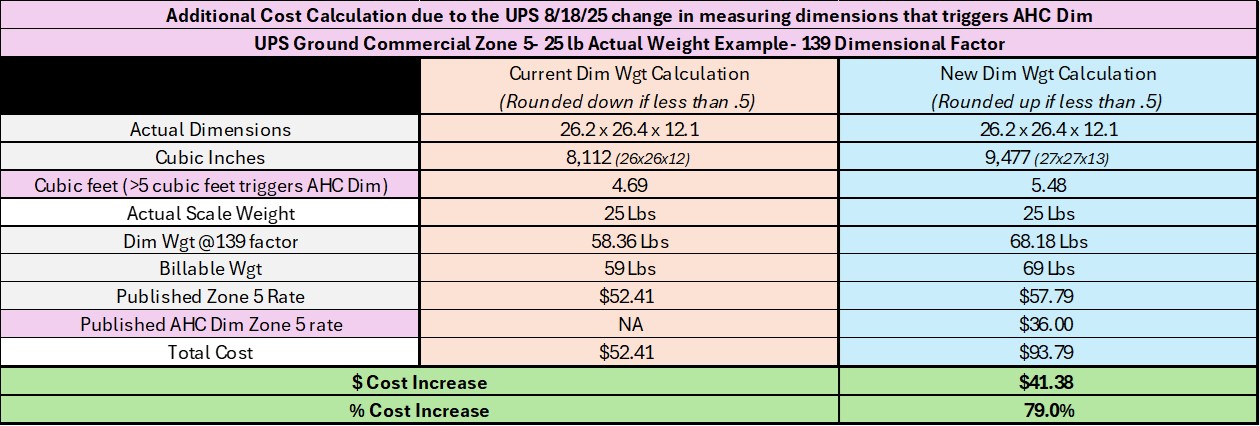
Example 2: Triggering Additional Handling Charge (AHC)
A small increase in any dimension could now surpass AHC thresholds
Result: New fees added on top of base shipping costs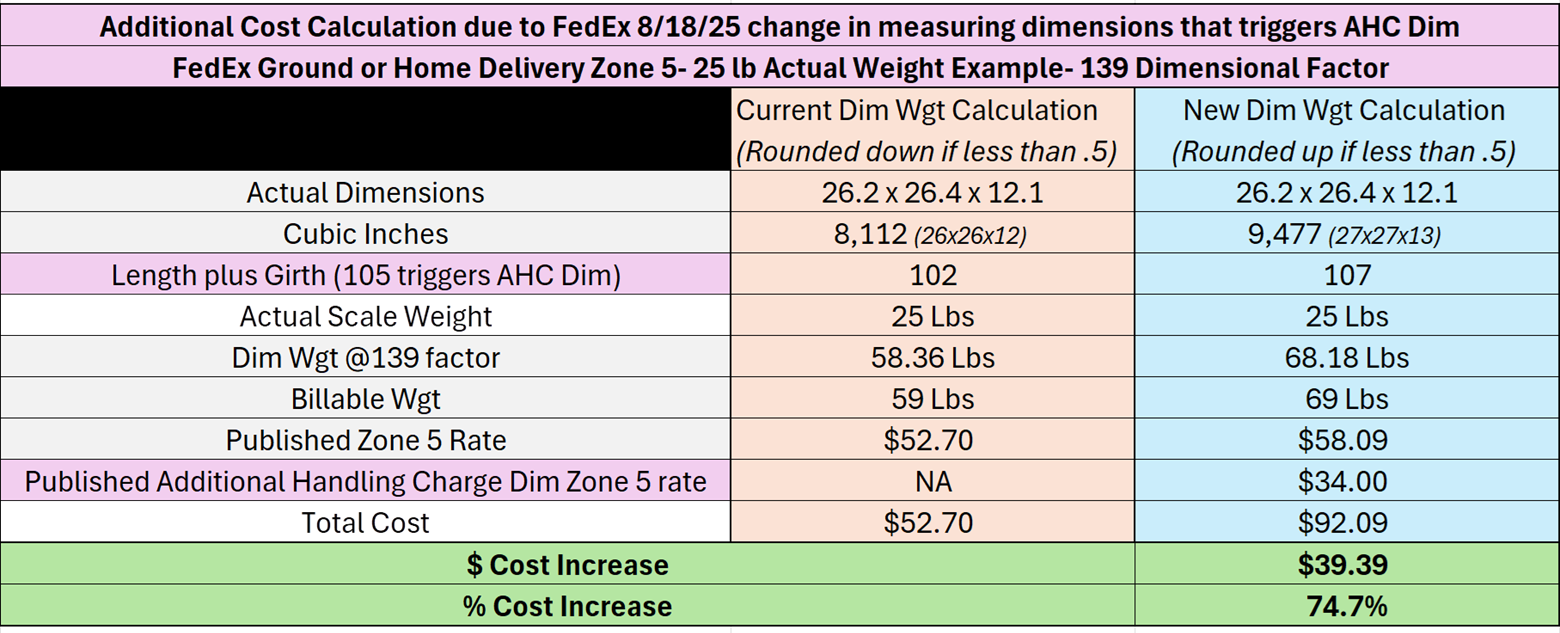
Example 3: Triggering Oversize (LPS) Surcharge
An increase in dimensional length could push packages into the Oversize category
Result: Significant surcharge applied per package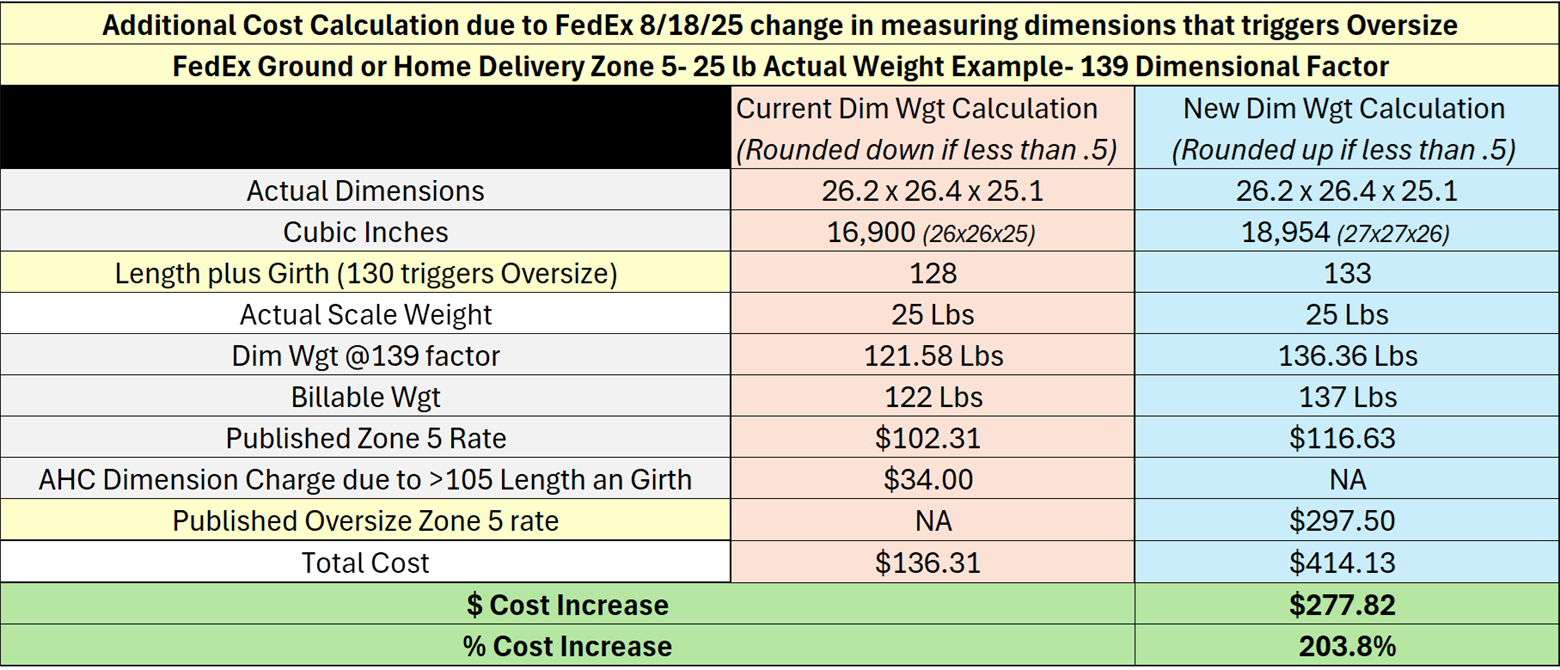
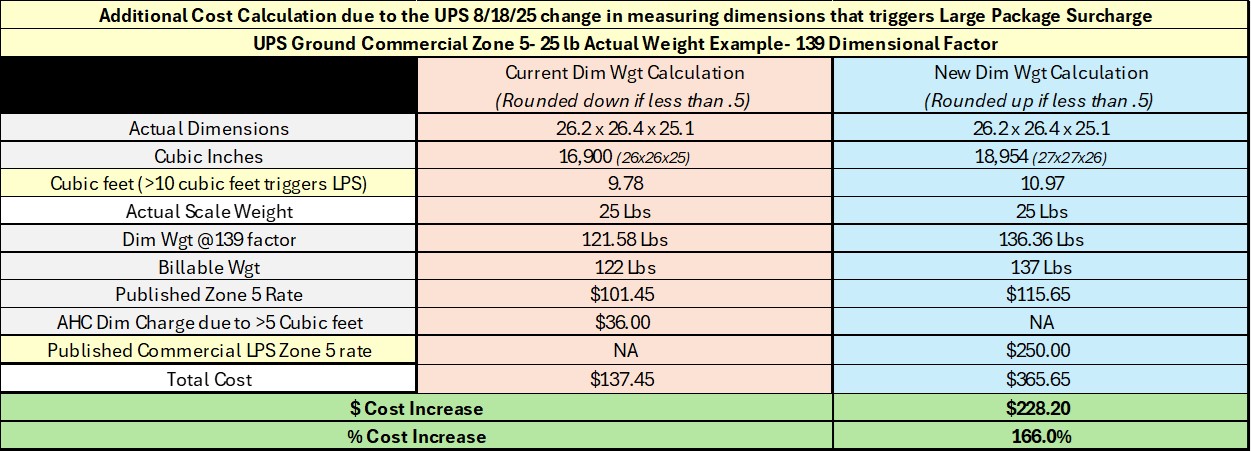
These examples represent worst-case scenarios where dimensional increases exceed multiple pricing triggers. Even in less extreme cases, the cumulative cost of this change can be considerable for high-volume shippers.
Why You Should Act Now
The dimensional weight policy changes puts cost pressure on shippers, especially those with irregular or lightweight packaging. And now with both FedEx and UPS enforcing the same standard, the opportunity to mitigate cost by switching carriers is limited. For many, adjusting packaging strategy or auditing parcel profiles could offset rising charges. At minimum, you need to model the potential impact on your network before the change goes into effect.
Understanding how this update affects your business requires data visibility and shipping expertise.
Need help navigating FedEx and UPS dimensional weight changes?
Connect with a parcel shipping expert at Transportation Insight to assess the impact and identify cost-saving strategies tailored to your shipping profile. Talk to an expertAbout Author:






On this article:
Sign up for the TI newsletter to get exclusive updates.