
- Solutions
Back to Knowledge Center
Designing Logistics for the AI Data Center Buildout
Design logistics for AI data centers and energy projects with fewer delays, less risk and stronger contingency plans by unifying carriers, control centers and data.
Feb 24, 2026 — 6 Min Read
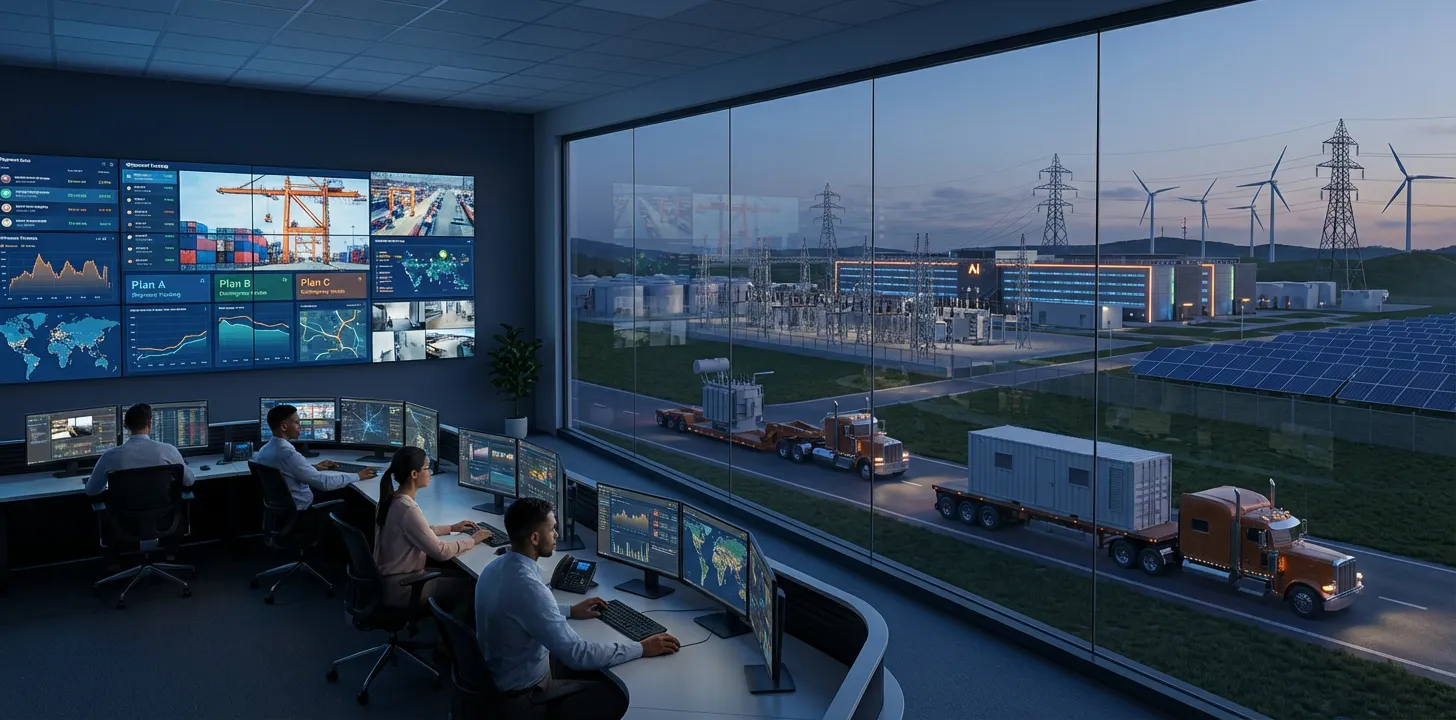
Most conversations about AI and the energy transition focus on algorithms, power curves and regulation. Very few focus on the physical work of getting concrete, steel, transformers and high density computing into the right place at the right time.
That layer of work drives a significant share of execution risk in data center logistics and large-scale energy logistics programs:
- Each new AI data center or grid asset creates a logistics problem in disguise
- Project timelines often hinge on one missed crane window or one damaged transformer
- The shift toward remote and constrained sites amplifies both risk and cost
Treat AI and energy infrastructure as purely financial or technical stories and you ignore a critical point. The organizations that will win in this buildout treat logistics as a core design variable, not a downstream detail that teams tackle after project approval.
The New Logistics Reality for AI and Energy
AI data centers and new energy assets rarely sit inside mature high-capacity industrial zones. Developers push them to the edge of existing infrastructure where power costs, water access and zoning rules make projects viable.
That shift creates three interlocking challenges.
1. Geography at the edge
- Limited access routes with weight restricted bridges and tight turns
- Roads that never anticipated heavy haul or constant construction traffic
- Seasonal constraints from mud, snow, high winds and local ordinances
In this landscape, data center logistics and energy logistics look more like field engineering. Teams verify routes against real constraints; sequence loads around laydown space and crane windows and define contingency options before they break ground.
2. Fragile and expensive freight
Project freight blends:
- Racks, batteries and high-density servers that teams cannot afford to damage
- Transformers, generators and modular units that push size and weight limits
Damage tolerance effectively drops to zero. The mix of specialized equipment and carriers shifts over the life of the project and the insurance and compliance burden grows heavier.
3. Time pressure and thin recovery paths
AI and energy projects run on aggressive schedules with capital already committed. Freight often sits on the critical path even if it looks small on a budget sheet. Many teams still:
- Assume transportation will simply slot into finished construction plans
- Understate how many tasks depend on specific components arriving on time and in sequence
- Rely on improvised recovery when things slip, which drives premiums and stress
Under these conditions, logistics variance does not disappear. It either shows up early where teams can manage it or late where it undermines schedules and margins.
Solving the Problem by Design, Not More Effort
You cannot fix this with more emails, more spreadsheets or more heroics. You solve it by designing logistics as a system that supports AI data centers and energy projects at scale.
Four elements matter most.
1. Treat logistics as part of project architecture
When teams define sites, capacity and timelines for an AI data center or grid asset, logistics belongs in the same room as engineering and finance:
- Validate site choices against real access and routing constraints
- Build load sequences into construction phasing so freight, cranes and crews line up
- Price in realistic lead times and recovery options instead of idealized assumptions
This mindset turns logistics from a late-stage constraint into a set of design inputs that protect the schedule.
2. Build a project ready carrier and equipment ecosystem
Infrastructure projects rely on a mix of asset-based fleets and brokers. A project-ready ecosystem does not emerge by accident. You curate it with:
- Proven specialized equipment capabilities
- Insurance and compliance standards that match high value, high risk freight
- Measurable performance, not only anecdotes
With that foundation, logistics teams can match each move to the right provider instead of scrambling for capacity at the last minute.
3. Run project freight through a control center
Instead of scattering ownership across tools and teams, leading organizations operate a control center model:
- A robust TMS to plan, tender, track and settle across LTL, TL, drayage and parcel
- Human in the loop oversight for critical moves, where operators act on system alerts and keep high value freight in view
- Dynamic dashboards that link transportation performance to project milestones and financial outcomes
That control center turns thousands of shipments into a single operational picture that project leaders can govern.
4. Turn visibility into action
Most teams already collect plenty of data. The gap sits in how consistently they use it to drive decisions.
A better model:
- Normalizes data across modes and carriers
- Focuses metrics on cost, service and risk that tie directly to project goals
- Surfaces early signals, like rising accessorials on remote deliveries or repeat permit issues on a route
With that level of intelligence, logistics leaders can walk into AI data center and energy planning conversations with options and tradeoffs, not just warnings.
Where Transportation Insight Fits
Many organizations feel this pressure but do not have the bandwidth to redesign logistics while they keep projects moving.
A partner like Transportation Insight can accelerate the shift from effort to design.
Transportation Insight blends multimodal transportation management, business intelligence and hands-on execution to support shippers that build and operate complex networks. For AI data centers and energy projects, that support includes:
- Curated ecosystems of asset-based carriers and brokers with the right specialized equipment and compliance posture
- Human in the loop track and trace for high value, high risk project moves so teams see issues early and act with better choices
- A Control Center approach built on a robust TMS and dynamic dashboards that unify project freight into a single operational view
- Data and analytics capabilities that present transportation performance in terms that matter to finance, operations and project leadership
No one can remove all the risks from AI and energy infrastructure. You can decide whether logistics risk arrives as a surprise or as a managed input. When you design primary, secondary and even tertiary contingency plans around that risk, you limit downtime and protect critical milestones so crane windows, energization dates and launch timelines stay intact.
Treat data center logistics and energy logistics with the same rigor as the assets themselves, and the entire buildout becomes more predictable and more scalable.
About Author:





On this article:
Sign up for the TI newsletter to get exclusive updates.