
- Solutions
Back to Knowledge Center
Fixing Transportation Problems at the Source in Operations
Operation decisions make or break transportation optimization. Aligning upstream processes can cut expedited shipments and turns freight into a financial lever.
Apr 6, 2026 — 6 Min Read
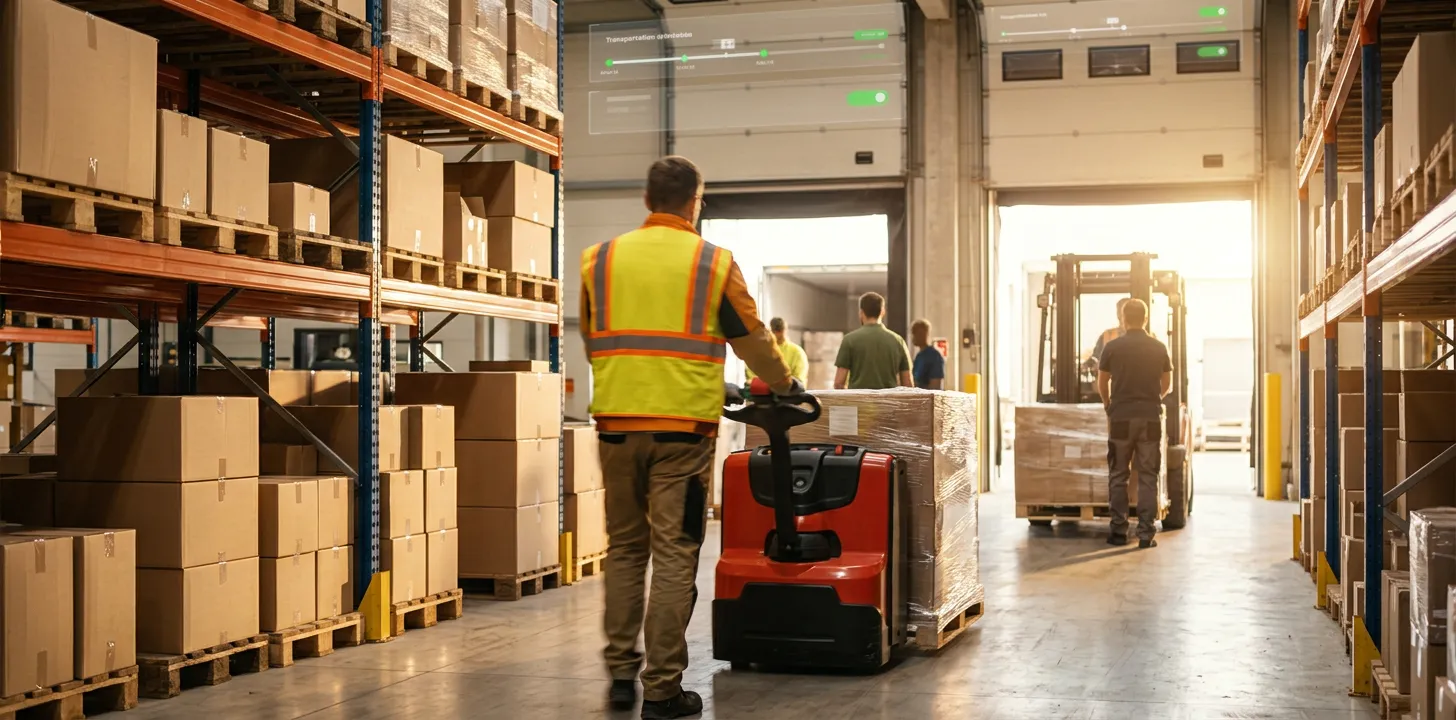
Most transportation optimization problems do not start at the dock.
They show up there.
By the time your teams are scrambling to find capacity, paying for expedited freight or escalating missed deliveries, the real decisions that shaped those outcomes were made days or weeks earlier in planning, production, order management and sales.
For operations leaders, that is both the bad news and the opportunity. If you want sustainable transportation optimization, you must optimize the decisions that feed your network, not only the loads that leave your facilities.
Why Operations Feels Transportation Optimization Pain First
On the surface, many transportation issues look like classic transportation management problems:
- Routing guides are bypassed
- Tenders are rejected
- Exception queues are full
- Expedited shipments quietly become the norm
It is easy to conclude that execution is undisciplined or that transportation teams are not enforcing policy. The reality is more complex. Transportation is the point of impact, not the point of origin.
Decisions made in demand planning, order commitment, production planning and customer service all shape the context in which transportation optimization is possible. When those decisions are late, misaligned or ownerless, the transportation team is left to manage residual risk with fewer options and higher cost. No transportation optimization engine can recover the savings from consistently late decisions upstream.
How Late Decisions Become a Hidden Tax on Freight Optimization
Think about how many operational choices in your organization happen at the last possible moment. Late decisions compress options, and compressed options almost always cost more.
The reality is, the closer you move the transportation routing decision to the expected delivery date, the more challenging, and potentially more expensive, your transportation optimization problem becomes.
A familiar scenario
A critical order is booked late. To protect the relationship, sales promises a delivery date that compresses normal lead time. Production adjusts the schedule to squeeze it in.
By the time the transportation team sees the shipment:
- Consolidation opportunities are gone
- The optimal carrier is committed on that lane
- Dock times are full at the origin location
To hit the promise, the team defaults to:
- Expedited mode instead of standard service
- Smaller, less efficient loads
- Accessorials for after hours or weekend work
Each decision is rational in isolation. Across hundreds or thousands of shipments, this pattern becomes a hidden tax on your P&L. Transportation cost drifts up with no obvious single cause, and your freight optimization tools look ineffective when the real problem is decision timing.
Unlock Your Transportation Decision Advantage
Take a short assessment to see how decision timing and ownership impact your transportation cost and executive‑level visibility.
What Transportation KPIs Are Really Telling You
Many transportation KPIs are really reporting on operations design, not just carrier execution or TMS performance:
- On-time performance slipping
- Rising use of expedited modes
- Routing guide compliance dropping
These symptoms often trace back to orders accepted inside consolidation windows, production changes made inside tender lead times, or promises that do not align with your transportation planning assumptions and network design.
If you only respond with more carrier bids, more transportation optimization features or stricter enforcement, you may see short-term gains. If the structure of upstream decisions does not change, transportation performance and financial outcomes will not change in a durable way.
In other words, transportation optimization and freight optimization are constrained by decision optimization in operations.
Moving Transportation Decisions Upstream
Organizations with a transportation decision advantage move key decisions earlier in the planning cycle and make them repeatable.
For operations leaders, three shifts matter most.
1. Define planning horizons for transportation planning
Specify:
- How far in advance shipping mode and service level should be finalized
- When orders must be confirmed to qualify for consolidation
- The latest point at which production changes can be made without triggering exception workflows
These planning horizons set the deadlines for transportation optimization and freight optimization. They define how much time and data the network has to generate efficient options.
2. Clarify ownership of transportation sensitive decisions
For each major decision, define:
- Who owns it when it is still flexible
- Who owns it once it crosses a time threshold
- Who must be informed when a late change will break the intended design
Clear ownership turns optimization from a technical exercise into a management discipline that supports better transportation performance.
3. Make tradeoffs explicit, not implicit
Late orders or schedule changes are sometimes necessary. They should not be treated as free. Put simple rules in place so that:
- Exceptions inside standard windows carry visible cost and service implications
- Production moves that force premium transportation are consciously approved
This keeps transportation optimization aligned with business intent, not just daily firefighting.
Two Different Operations Cultures
Contrast these two anonymized scenarios. Which one would you rather operate in?
Company A: Heroics
- Promises and schedules stay flexible until the last minute
- Transportation learns about changes when loads are ready to ship
The team calls carriers for favors, approves expedited shipments and reworks docks late in the day. Short-term targets are met, but transportation cost trends up and relationships are strained. On paper, they have transportation optimization tools. In reality, they rely on heroics.
Company B: Structure
This organization still deals with surprises. It has:
- Documented decision windows
- Clear exception roles
- TMS and analytics configured to reflect those rules and flag violations
Customer requests that fall outside standard windows trigger visible tradeoffs and, when needed, escalation. The transportation team flexes inside a structure aligned to financial goals. Over time, freight shifts from volatile expense to controllable lever, and transportation optimization gains hold.
Where to Start
You can begin with a few focused questions.
- Where do transportation-related decisions actually get made today?
For one or two critical flows, map where orders are accepted, schedules are set and promises are made relative to when loads are built and tenders are sent. This shows where transportation optimization is already constrained.
- Which decisions consistently land inside the danger zone?
Identify the points where choices routinely fall inside consolidation windows, tender lead times or carrier cutoffs.
- Who believes they own these decisions, and who feels the impact?
Misaligned ownership is a common source of recurring exceptions and higher freight cost.
From there, you can define small structural changes such as earlier cutoffs, explicit exception approvals or new signals into planning that move decisions upstream and expand the optimization space.
If you want a concise read on where your current decision structure helps or hurts your transportation performance, the Transportation Decision Advantage Self Evaluation can provide it.
The self-evaluation highlights where your timing, ownership and evaluation are strongest and where small changes in operations could unlock a more disciplined, C-suite ready transportation environment.
For operations leaders, the message is straightforward. Most of your transportation challenges are decision challenges in disguise. When you redesign the decisions that shape demand, production and promises, you create the conditions for consistent transportation optimization, better transportation performance and a more stable, predictable P&L.
About Author:





On this article:
Sign up for the TI newsletter to get exclusive updates.