
- Solutions
Back to Knowledge Center
2025 Parcel GRI: Navigating Higher FedEx, UPS Shipping Rates
Once the holiday season is over, shippers in the new year will face significant changes in 2025 with UPS and FedEx announcing their usual General Rate Increase (GRI) for their services. As businesses strive to optimize their shipping strategies while controlling costs and providing excellent customer experiences that drive repeat business, understanding the nuances of […]
Dec 13, 2024 — 3 Min Read

Once the holiday season is over, shippers in the new year will face significant changes in 2025 with UPS and FedEx announcing their usual General Rate Increase (GRI) for their services. As businesses strive to optimize their shipping strategies while controlling costs and providing excellent customer experiences that drive repeat business, understanding the nuances of these rate adjustments becomes paramount. Let’s take a deeper dive into the details of the 2025 FedEx and UPS shipping rate hikes and explore how organizations can navigate these changes effectively.
Detailed Overview of the Rate Increase
Both UPS and FedEx have announced an average rate increase of 5.9% across a range of services impacting U.S. domestic, export and import shipments. This marks the fourth consecutive year of rate hikes exceeding an average of 5.0%. UPS’s 2025 rates will go into effect on December 23, 2024, and FedEx’s 2025 rates will go into effect on January 6, 2025 – these adjustments encompass various elements such as base transportation rates, minimum net charge increments and double-digit surcharge escalations for oversize packages, as well as those that require additional handling.
Of particular interest is the early rate increase by UPS preceding the Holiday season, resulting in businesses experiencing an extended period of increased shipping costs leading up to Christmas.
Comparative Analysis with Previous Years
While the 2025 rate increases may appear relatively consistent with or slightly below those of 2024 and 2023, a deeper examination reveals a significant rise compared to the average increases observed over the past five or ten years. Minimum service charges have seen a notable surge, with domestic minimums escalating by 40% in the last five years and nearly doubling over the past decade for both major carriers.
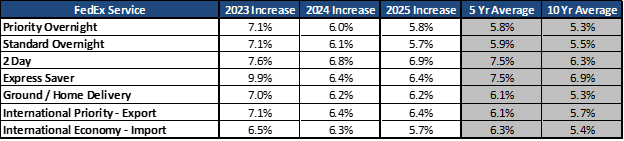
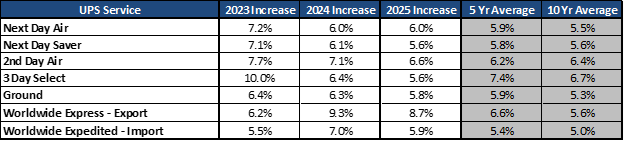
These average increases apply specifically to published package rates covering US 48 Zones for domestic services and all zones for international services, highlighting the broad impact across different shipping categories.
Key Highlights of the 2025 Rate Increases
- Additional Handling Charges: Sustained annual increases of over 25%, with certain zones experiencing significant escalation.
- Large Package Surcharges: Annual increments exceeding 25%, marking the third consecutive year of hikes for Commercial Large Package surcharges.
- New Surcharges: Introduction of fuel-applicable surcharges for U.S. domestic package services by FedEx, incorporating elements like Accessible Dangerous Goods, Dry Ice and Hazardous Materials.
- Adjustments to UPS Services: Changes including modifications to Zonal Tables, Delivery Area Surcharges and revised calculations for Large Package Surcharges effective from 2025.
Impact of Fuel Surcharges
Fuel surcharges have risen consistently since 2020 across US domestic and international services, reflecting carriers’ responses to fuel price fluctuations and global transportation challenges. The compounding effect of these increases underscores the importance of managing fuel-related costs within shipping budgets.
Strategies for Navigating Change
Considering these rate adjustments and operational shifts, businesses must proactively strategize to optimize their parcel shipping operations and maintain cost-effectiveness. Collaborating with parcel shipping experts like Transportation Insight enables companies to gain valuable understanding, implement operational improvements and effectively manage customer expectations while safeguarding profitability amidst changing industry dynamics.
Empower Your Shipping Strategy
As organizations navigate the FedEx and UPS shipping rate increases for 2025, engaging with industry professionals can lead to tailored solutions that address specific shipping challenges and capitalize on growth opportunities. By leveraging expert guidance and strategic support, businesses can enhance their shipping networks, streamline operations and deliver exceptional service to customers.
For personalized insights and strategic guidance on adapting to the 2025 rate increases by UPS and FedEx, connect with our team of experts to elevate your shipping strategy and maximize efficiency in the evolving logistics landscape.
About Author:
More Blogs





On this article:
Sign Up for the TI Newsletter