
- Solutions
Back to Knowledge Center
Why Transportation Visibility Alone Is No Longer Enough
Transportation visibility shows what changed. Learn why teams now need decision intellignce support to know what matters and act with confidence.
Nov 3, 2026 — 7 Min Read
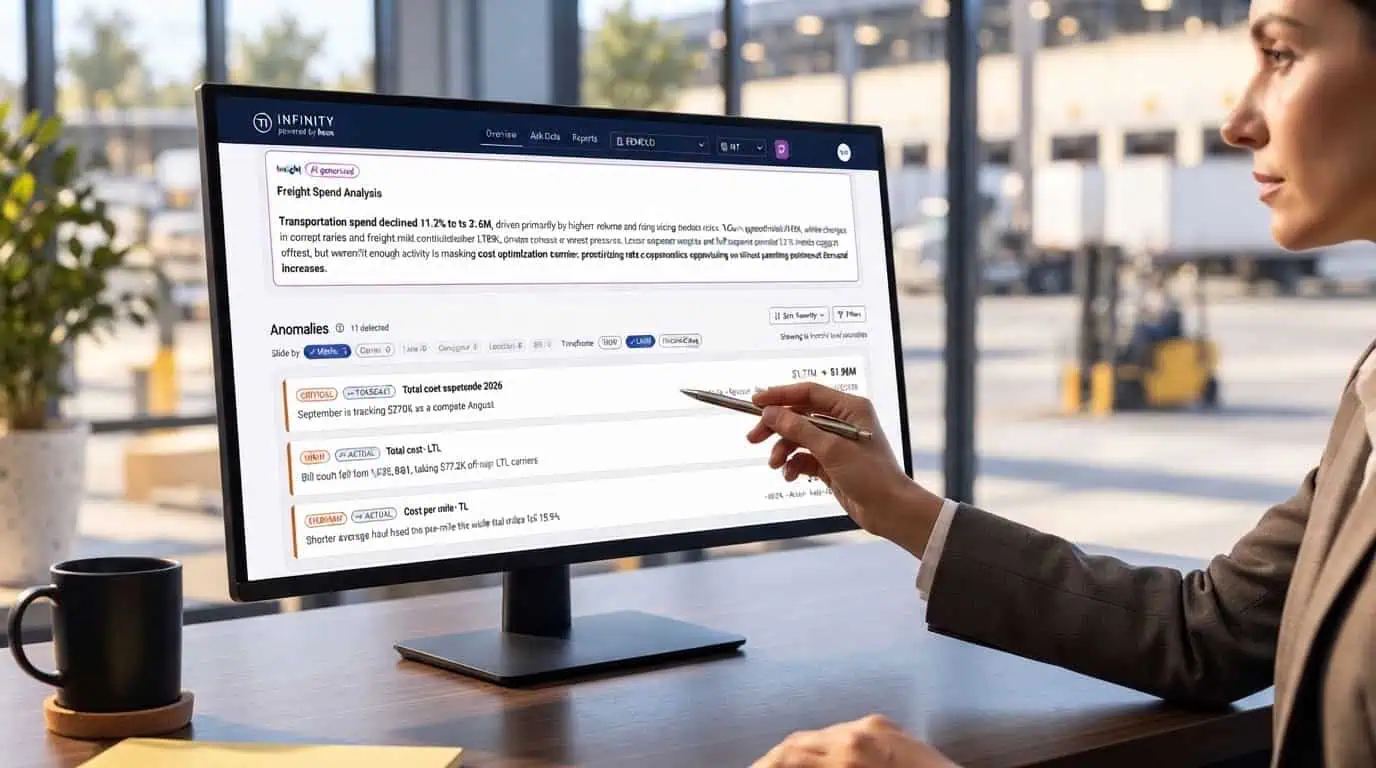
Most transportation teams I talk with don’t have transportation visibility problems anymore. They can see their shipments. They can see the exceptions piling up, the carrier that missed a pickup and the lane where costs jumped last week. What they can’t always see is which of those things deserves their attention first.
That’s the gap. In a network that changes by the hour, seeing a problem and knowing what to do about it are two different jobs. Increasingly, the second job is where teams win or lose.
Why Does Transportation Visibility Still Matter?
Visibility still matters because you can’t manage what you can’t see. Teams without it react late or work around blind spots.
For leaders, it means spotting patterns earlier, catching risk sooner and understanding how transportation performance ripples into customer commitments and cost. For logistics managers, it’s the daily tool for catching exceptions and keeping freight and parcel moving.
So, I’m not arguing against visibility. I’m arguing it was never meant to be the finish line. Plenty of organizations have invested heavily in seeing more, and decision-making has gotten harder, not easier. The screen fills up faster than anyone can work through it.
Where Does Visibility Fall Short?
Visibility falls short at the moment someone must decide what to do. Picture a normal morning. A shipment is running late. A carrier just flagged a capacity issue. Accessorial charges on one lane crept up again. All of it sits right there on the dashboard.
Now the real questions start. Is the late shipment a minor annoyance or a customer you’re about to lose? Does the carrier issue need action today or just a close eye? Is the cost creep worth taking to finance, or is it noise?
The dashboard can’t answer those. Even with good data in front of them, people struggle to:
- tell which changes actually matter
- connect an issue to cost, service or margin
- rank several problems competing for the same hour
- move fast without creating new disruption
- commit when the right move isn’t obvious
I look at this the way I’d look at any process. Every hour spent sorting signals that don’t matter is waste. Every escalation that didn’t need to happen is waste. More alerts don’t fix that. Often, they make it worse, and teams end up chasing whatever’s loudest instead of whatever’s most important.
What Do Transportation Teams Need When Conditions Change Fast?
When I sit down with shippers, four needs come up repeatedly.
- Faster Understanding: Not faster data. Faster meaning. Is this change normal variation or something real? A one-off or a pattern? Answer that early and you stop burning hours on analysis that leads nowhere.
- A Clear Line to Business Impact: A late truck is just a late truck until you know what’s on it and who’s waiting for it. Tie the signal to cost, service and margin, put it in plain language, and it travels. Everyone from leadership to sales, operations, finance and customer success can work from the same picture.
- Better Prioritization: This is where I see performance break down most often. Ask a logistics manager what they worked on yesterday and what mattered most yesterday. The two lists often don’t match. Good decision support narrows the field: what needs action now, what to watch and what can wait.
- Confidence in the Next Move: A fast wrong call costs money. So does hesitating, and so does overreacting. Teams need enough context to act with conviction. That doesn’t replace judgment. It gives judgment better material to work with.
What Is Decision Support in Transportation?
Decision support in transportation turns shipment and network signals into business context, clear priorities and recommended next steps, so teams can move from knowing something changed to acting on it.
It matters because transportation decisions rarely sit in isolation. Protect a delivery date and you might blow up the budget. Save on one lane and you might put service at risk on another. Good decision support puts those tradeoffs on the table before you commit.
Here’s a simple example. Two shipments run late on the same day. One carries replenishment stock for a distribution center with two weeks of inventory on hand. The other carries products for a retail customer with a tight delivery window and chargebacks attached. On a dashboard, they look identical. With decision support, the second one jumps to the top of the list, and the team knows why.
Technology isn’t the whole answer, though. The best decision support pairs AI-enabled technology with people who know your network and can pressure test a recommendation when a call is close.
How Does Decision Intelligence Improve Response?
Decision intelligence improves response by reading context into an exception instead of just flagging it. That’s the difference between intelligence and a louder alarm. Your team starts with what changed in a way that matters, what it’s likely to affect and what to handle first.
That context must reflect your priorities, not someone else’s. One shipper cares most about protecting service. Another watches margin. Another needs network stability above all. A generic transportation analytics report treats them the same. Decision intelligence shouldn’t.
The Takeaway: Move From Seeing to Deciding
Conditions aren’t just changing more often. They’re changing in ways that shrink the time you must respond while raising the price of getting it wrong. Slow understanding, weak prioritization, hesitation and overreaction all land in the same place eventually: cost to serve.
Decision speed is a process like any other. You can map it, find where it stalls and take the waste out. Most teams have already done the hard work of collecting the data. The next gain comes from shortening the distance between a signal and a sound decision.
Keep your transportation visibility. You need it. Just don’t expect it to tell you what to do next.
That’s the problem we designed TI Infinity to solve. It works on top of the visibility tools you already trust, flags the changes that matter, explains why in plain language and points you to where to start. Our team works alongside it when a call needs a second opinion.
Know sooner. Decide better. See how TI Infinity works.
Frequently Asked Questions
What is transportation visibility?
Transportation visibility is the ability to monitor shipments, carrier performance and network conditions across freight and parcel operations as they happen. It shows what’s happening, not what to do about it.
Why is visibility alone no longer enough in transportation?
Visibility surfaces issues but doesn’t tell teams which ones matter most, how they affect cost and service or what to do next. As conditions change faster, teams need decision support to sort signals, prioritize and act with confidence.
What is the difference between visibility and decision support?
Visibility shows what changed. Decision support explains why it matters, connects it to cost, service and margin and helps teams decide what to handle first.
How does decision intelligence help logistics professionals?
Decision intelligence uses AI to add context to shipment and network data, separate meaningful change from noise and recommend what deserves attention first. Logistics professionals can then respond faster while staying aligned to priorities such as protecting service or controlling cost.
About Author:
More Blogs




On this article:
Sign Up for the TI Newsletter